Struggling to Stand Out? Here’s Why Your Pharma Brand Is Losing Visibility!

In the highly competitive pharmaceutical industry, your brand’s visibility plays a crucial role, i.e., it can make or break your market success. If your brand is struggling to make a lasting impression, several factors may be contributing to its diminishing presence. The good news? With the right strategies, you can boost your visibility and regain your competitive edge. Inconsistent message across multiple channels can confuse your audience and weaken your brand’s identity. Whether it’s a mismatch in tone between your website and social media, or conflicting brand messaging in promotional materials, inconsistency can erode trust. In pharma, maintaining a unified voice across all platforms is even more critical —regulatory compliance, patient safety, and professional credibility must be consistently communicated to build rust and recognition. An outdated or minimal digital footprint can severely limit your brand’s reach, especially in today’s digital-first world. To improve visibility, focus on optimising your website with a user-friendly design, engaging educational content, and patient-centric resources. Robust social media strategies and effective SEO can also drive traffic to your site. Remember, reaching both healthcare professionals and patients requires a tailored approach to digital approach to digital content — one that addresses their unique needs and fosters trust. Audience engagement is vital for nurturing loyalty and maintaining brand relevance. In the pharma sector, this means going beyond the typical advertising model. Actively engage with your audience —through live webinars with thought leaders, educational social media content, and personalised email newsletters —keeps your brand top-of-mind. By consistently offering value, you can strengthen relationships with both healthcare professionals and patients, making them more likely to trust and choose your brand. In pharma, scientific information is essential, but it must be communicated in a way that resonates with your target audience. For general public, balancing technical information with accessible, patient-centric content ensures broader appeal. For healthcare professional, presenting complex data in a more digestible format can improve understanding without sacrificing credibility. In both cases, your goal should be to simplify complex information without losing the core scientific integrity, ensuring your content remains both accurate and relatable. Improving brand visibility in the competitive pharma market requires clear, consistent communication, a robust digital presence, and a meaningful engagement with your audience. By refining your messaging, optimising your digital strategies, and focussing on patient and HCP relationships, you can regain your visibility and strengthen your brand’s position in the market. Don’t wait —start implementing these strategies today to see tangible results!

5 Strategies for Balancing Pharma Product Innovation with Regulatory Body Mandates.

Product managers in the pharmaceutical industry are positioned at a turning point where innovation and regulation convergence occur. The task is obvious: balancing the need for novel drugs with stringent regulatory requirements. This delicate balancing act is crucial since it affects both the patient’s health and the product’s success. Product managers can use these 5 useful techniques to get beyond this obstacle: By embracing early regulatory engagement, fostering collaboration, implementing agile practices, prioritising patient needs, and committing to continuous learning, pharmaceutical product managers can successfully navigate this complex landscape, driving innovation while ensuring compliance and patient safety.

International Product Management: Navigating the complexities of international markets, including regulatory variations, pricing dynamics, cultural differences, and market access challenges

Globally, market access has drawn a lot of attention as nations struggle to control their rising healthcare costs amid the international economic downturn. Governments have responded by implementing more stringent guidelines for the approval of new products. As a result, pharmaceutical firms are having a harder time addressing the unique issues brought up by diverse governmental, regulatory, and stakeholder entities. The demand for market access services is growing, particularly in developing nations where the complicated and changing healthcare system makes it difficult to get products approved and used. Additionally, emerging markets are currently the primary drivers of growth, making success in these areas crucial for the bulk of pharmaceutical businesses. Due to greater awareness among regulatory and reimbursement authorities of the requirement for value above existing therapies, the market access role has progressively grown in relevance in developed economies. Pharmaceutical businesses have started to integrate the market access function within the organisation in order to deal with this shifting regulatory environment. Only a small number of businesses, however, now have a market access team with well-defined roles and duties. As a result, the majority of pharmaceutical firms today have a fragmented strategy, with sales, marketing, and regulatory departments each handling a portion of the market access duties. A pharmaceutical business will need a complete market access strategy to thrive in such complicated areas. This has to be tailored to meet local difficulties and tightly connected with other business operations. In contrast to established countries, the healthcare environment in developing nations is complicated and lacks a formalised medication approval procedure. For interacting with a wide range of stakeholders during market access, there are many different procedures and activities involved. The essential success characteristics that a business must implement in order to get easy market access are as follows:

TOP 10 CHALLENGES IN PHARMACEUTICAL PRODUCT LIFE CYCLE MANAGEMENT

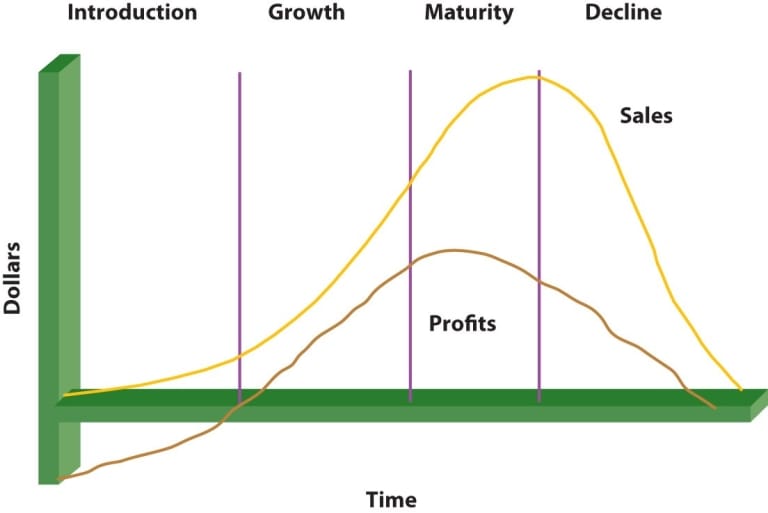
All products and services have certain life cycles. The term “life cycle” describes the time span between a product’s first release onto the market and its eventual withdrawal. Significant adjustments are made to the product’s market behavior during this time, which is reflected in the sales to the firm that brought it to the market. Understanding a product’s life cycle can assist a company in determining its position in the market relative to rivals and the success or failure of the product. But certainly, there are some challenges in the process. The following are the main obstacles to pharmaceutical product lifecycle management that I have attempted to highlight in this article: The fact is that many pharmaceutical organizations experience information silos across many functional areas, which causes various challenges when managing the whole product lifecycle from product inception to phase out. Depending on the functional area, divergent, redundant, and erroneous product information is frequently a result of a range of diverse data sources and a lack of collaboration within the business. Opportunities exist for innovative pharmaceutical companies looking to restructure their businesses and achieve profitability and growth in an environment that is becoming more and more competitive. Companies will experience enhanced company performance and differentiation in the market and technology if they properly manage the transformation process to meet these concerns. Since the manufacturing process for pharmaceutical products is extremely iterative, control must be developed for each lot from scale-up to validation and quality assurance, and finally to the marketing of the final, approved product. Drug production must be scaled up effectively, which necessitates cooperation across a variety of interconnected activities and dependencies. When flaws are discovered during regulatory audits, quality and risk management continue to be difficult tasks with substantial commercial ramifications. From product development to commercialization, quality must be integrated and managed as part of an efficient enterprise quality management system. Pharmaceutical packaging is strictly regulated and has to pay attention to ingredients, product quality, and adverse event labeling. Pharmaceutical firms must deal with various regulatory, linguistic, and counterfeit control needs as a result of global distribution. The commercial success of medicine depends heavily on cost management and keeping maximum flexibility in today’s fiercely competitive climate. The regulatory integrity of all related commercial content will be improved by creating a global archive for all package elements, digital assets such as logos and artwork, and marketing materials that reference development evidence. This complicates the management of drug compound registration and is continually changing. This causes market launch delays and adversely affects the projected sales of the product. Clinical study and regulatory approval phases generally take up a major portion of a new drug’s patent protection period. Pharmaceutical companies must provide a portfolio of new pharmaceuticals and drug extensions to the market more swiftly in order to maintain their competitiveness and benefit from the patent protection period. To increase productivity, concentrate on their core competencies, and take advantage of the pooled expertise, pharmaceutical businesses increasingly rely on contract service providers. Collaborative talents enable the quick identification of problems with products and processes as well as the implementation of necessary modifications. By exchanging data with their product development department, businesses can remotely examine and approve outsourced components of products and projects. Many pharmaceutical firms find it necessary to put additional quality control systems in place since they were responsible for producing a high-quality products. Companies need an infrastructure to identify current or potential quality issues in order to comply with CAPA regulations. By removing the need for manual documentation, enhancing the efficiency of root cause analysis, and streamlining time-consuming feedback procedures, having CAPA procedures online and tightly integrated with core product information cuts costs.

7 SECRETS OF TOP PHARMA BRANDING AWARENESS

Brand awareness, used in marketing, refers to how well customers can name a product. Customers’ awareness of the brand should ideally include favorable opinions about the characteristics that set the product apart from its rivals. Promotion of a new product or reinvigoration of an established brand both needs building brand awareness. These are some points you can use to build brand awareness: It’s fine if your current branding efforts are aimed at a broad audience. However, you should segment your efforts so that you can target specific sections. This means you’ll continue to reach out to your entire audience base but in more targeted ways. Marketing segmentation is the process of breaking down your current consumer base into smaller subgroups. However, rather than demographics, you will segment them based on brand interactions and behaviors (such as age, gender, and location). Tracking tools like Google Analytics might assist you in doing this. You will be able to target each audience segment more specifically by being able to see how various audiences interact with your website and marketing initiatives. An important factor in generating organic traffic is search engines. In other words, a strong showing on search engine results pages (SERPs) can aid in bringing more relevant visitors to your website and raising brand recognition. In order to improve your SERP rankings, Search Engine Optimization (SEO) is necessary for this situation. It can be utilized on websites, social media accounts, and more. There are two forms of SEO that you should start thinking about. Which are: Even though SEO can be challenging to understand, especially if this is your first attempt at using it, the outcomes should be favorable for your company as a whole. One of the best channels for interacting with customers is social media, yet many businesses fail to take advantage of it. Social media marketing is essential for increasing brand recognition. You can enhance the experience of your present customers and enhance communication with potential consumers by prioritizing social customer interaction. Thankfully, there are several quick ways to do this: Combining these steps should increase customer interaction and your social media presence. Despite doing your best to convert website visitors, not all leads will go to the next stage. Remarketing campaigns enter the picture in this situation. In order to influence previously targeted audience members to convert, remarketing campaigns essentially connect with them. For instance, you could run ads on blogs and websites that you know your target demographic frequents. In an effort to get people to come back, these adverts can be made to appeal to individuals who didn’t convert on their first visit. You can then try to recoup all those previously unconverted audience members once you’ve created a solid remarketing campaign. Your conversion rates could go up as a result. One of the finest areas to explore when it comes to reaching out to your own audience is social media influencers or those with well-liked social media profiles and a specific demographic. After all, the “right” influencers frequently have a sizable amount of your desired audience’s attention. Find the most well-liked and frequently cited individuals and websites in your niche to start your search for these influencers. Then, try to make contact with them to start a dialogue. You’ll probably be able to find methods to assist each other if you place more emphasis on building relationships than just requesting favors. Impressive content creation for your personal blog is one thing. However, producing top-notch guest content will help you establish your brand and gain recognition when it comes to marketing. This entails giving detailed guidance throughout the article and responding to queries in the post’s comment section. Your brand will become known for its knowledge and desire to contribute to the community by guest posting on websites all across the internet. While influencers might assist you in connecting with your current target market, a brand relationship can introduce you to a completely different audience group. This way, you can even introduce your business to an untapped market. In a nutshell, a partnership is when two brands in related marketing sectors and product/service categories cooperate to boost sales and raise brand awareness for both parties. To further increase your reach, it is best to forge these relationships with firms that cater to a slightly different demographic. The fact that both parties benefit from these alliances is the best part. Therefore, once your brand is well-established, it may be rather simple to start up.

TOP 5 DESIGN ADVICE FOR PHARMA COMPANIES IN 2023

Recent years have seen a significant trend toward social media marketing and online interactive PDF brochures, however everything is still set up to be printed if necessary. Since conferences are once again a thing, there is a ton of advertising for businesses surrounding them in the form of stands and pop-ups. KEY POINTS FOR PHARMA COMPANIES IN DIGITAL AD DESIGN When creating digital designs, keep in mind that some of the advertising space is considerably smaller than you likely need to convey your message. In skyscraper advertisements, stick to the essentials and avoid using long words; otherwise, the font size will have to be reduced. Before placing an order, check the size of the advertising online to get a sense of the available area for your message. Calls to action should be succinct in order to be effective. To ensure that GIFs don’t exceed the file size limit, try to reduce transitions to a minimum. KEY POINTS FOR PHARMA COMPANIES IN PRINT AD DESIGN Look over the advertising of your rivals in the magazine to determine what draws your attention—is it the attention to detail or the powerful design? Advertising requirements vary depending on the market. If you can strive to reduce information to the fundamentals, there will be more area for design since designers will always try to put less text in so they can make things appear nicer. Advertorial space is something to think about if you have a lot of information. KEY POINTS FOR PHARMA COMPANIES IN BROCHURE DESIGN Take advantage of the blank space that a brochure can offer you, especially if it is in an online or pdf format and you are not restricted by the number of pages. In pharma brochures, employing a lot of imagery can help break up the dense scientific language, graphs, and charts. You can also use pull-out quotes or iconography to emphasize key themes to increase the impact of a page. Make sure all of your scientific information is properly labelled and that your headers and subheadings are apparent. OUTSTAND FROM THE CROWD: WHAT TO DO Go crazy! Do look at what your rivals are doing and take the opposite action! Consider pulling out important elements of your brand to make it more prominent by using dramatic colors. If there is a color associated with your brand, use it. People, in my experience, love other people, therefore market to them rather than the company itself. 1. Less can be more 2. Make the most of your brand 3. Imagery is everything, thus it’s worthwhile to hire a skilled creative photographer to visit your company and take some imaginative photos that can be used in advertising. 4. Be unique without being afraid. 5. Remember your (human) customer.

Five work habits that initiate top pharma brand building

A product manager sits at the intersection of multiple functions while going about building and implementing the vision for his products success. Here are 5 things every aspiring pharma product manager should know when creating a big pharma brand: 1.      Write everything down Add as much detail as you can, and ensure to include all the customer research gathered to build a rock-solid case. As a product manager, this step alone really even makes you question your stated assumptions. Product design requirements, design notes, callouts, and meeting minutes – and everything, must be written down. 2.      Smaller bite size chunks As you plunge deeper into your project, you will realize that it’s easier for you to design and sketch your ideas when you break them down to the bare minimum. Cutting down empowers you to focus on better quality. 3.      Focus on the details Show you care for your target audience by focusing on every small and fine details. What key elements should you highlight? What colors must you choose? Keep an eye on the big picture, but focus more on the finer details. 4.      Don’t just tell, SHOW using mockups Design unimaginable interactive mockups and workflow to help your users and do ask for early feedback. Having mockups early in the game allows you to prune unwanted interaction and identify potential pitfalls. 5.      Observe, don’t ask Customers that use your product daily, will want you to appear successful because that makes them successful too. Get the customers involved in creating the product so that they feel as if they were designing the product. It is far better to observe how people interact with your product, instead of asking them what they liked or didn’t like. When you ask, what they like or didn’t like, you get different reflex responses which may be out of courtesy. This “hands-on” play with the product helps you identify real issues.