How to Increase Doctors’ Pharma Brand Loyalty

With pharma brands competing more fiercely than ever before, the battle for physicians’ loyalty has intensified. Increasing client retention rates by just 5% can increase earnings by up to 95%. In a competitive market, it is critical for pharmaceutical companies to build brand loyalty among prescribers in order to stay on physicians’ thoughts. Brand loyalty, on the other hand, is one of the most difficult components of pharmaceutical marketing. Loyalty programmes do not work in pharma. To begin with, physicians may be turned off by the amount of data collected about their conduct. Second, utilising incentives to increase prescription rates has shown to be a hit-or-miss tactic in the past, and it’s time to try something new. Beyond prescribing loyalty Pharma brand loyalty, when effectively built, can have far-reaching and long-lasting consequences beyond prescriptions. A physician who is committed to your brand becomes your finest brand representative. If a physician has had a number of positive interactions with your brand, they will actively promote it to the extent of connecting their reputation with its ideals. All pharmaceutical companies should strive toward this as their ultimate goal. How can you increase pharma brand loyalty? Describe the drug’s research. According to one study, scientific literature is the primary rationale for prescribing medicine for 85% of surveyed physicians. Furthermore, clinical trial results are the first source of knowledge regarding a new treatment for 46% of physicians. Sales reps were the second most popular source, with 30% of HCPs acquiring their prescription information from sales rep calls. With these facts in mind, the necessity of properly informing HCPs cannot be overstated. Physicians should have easy access to the most recent research and clinical trials, which should be distributed through all company channels. During sales calls, sales staff should give objective information from periodicals, allowing HCPs to make a rational, informed decisions. Once such a practice is established, HCPs will regard your brand as a valued source of scientific information rather than someone who is constantly ready to sell. Make a mental shift among salespeople. Salespeople are still an important part of pharma marketing, despite their numbers dropping year after year. The problem, though, is in the word — sales reps. Reps should focus on providing a service rather than selling to develop meaningful connections and loyalty with physicians. Reps should converse with HCPs rather than with them. Reps can assist identify gaps in the present approach by carefully listening to physicians’ requirements. One of the most successful ways to communicate with physicians is through sales representatives. Unfortunately, many pharmaceutical companies underutilize their sales team, to the point where physicians only spend minutes with reps. As much as possible, use multi-channel. How many physician touchpoints does your brand now have? Even if your efforts are successful, you’re doing yourself a disservice if you’re still fixated on one channel (email, for example). Today’s doctors are more digitally present than ever before, and using just one channel isn’t enough to stay top of mind – you need to go multi-channel. Pharma companies must contact with HCPs through numerous channels in order to maintain continual engagement. Websites, emails, sales representative calls, webinars, webinars, conferences… Whatever it is, it must be completed. Instead of advertising the product, the messages should be consistent and provide helpful information to medical experts. In order to give a better experience, you must also use these channels to actively listen to physicians and identify their problem spots. When brand loyalty breaks out Your brand’s ardent fans may change their minds and quit prescribing your product. Instead of being concerned, you might investigate the problem and attempt to resolve it. Some of the reasons why doctors switch to competing brands are listed below. In the best-case scenario, new, related medications were released. This will happen, and the only way to avoid it is to objectively portray your drug’s strongest aspects. Negative feedback from KOLs and peers is the second cause. Unfortunately, this one is considerably more difficult to correct. finally, poor patient treatment outcomes are another cause for brand loyalty. Establishing pharma brand loyalty should be the ultimate long-term goal for pharma companies as a marketing strategy. In markets where branded pharmaceuticals dominate major segments of the market, it’s more vital than ever to build strong relationships with HCPs and deliver value in exchange for loyalty. Do you require assistance in developing your pharmaceutical brand marketing strategy? Our team of devoted professionals has worked with more than 20 global pharmaceutical companies. If you’d like to learn more about what we can do for you, please contact us.


How to communicate medical insights effectively?

Introduction Even though, prima facie, the purpose of medical affairs is to develop and maintain external relationships effectively,  medical affairs even refers to building credibility and partnerships with critical healthcare decision-makers. These days organizations are developing a strategic approach for generating compelling medical insights that bring profitable future opportunities. The definition of an “insight” is inconsistent as per the medical affairs function. A medical insight can take many forms, including sentiment, individual perceptions, data points, and trends within healthcare. Medical Science Liaisons (MSLs) fulfill the role of delivering medical insights to any medical or pharmaceutical company. They work throughout a product’s lifecycle, ensuring that the products are utilized effectively, are served as scientific peers and resources within the medical community, and are scientific experts to internal colleagues at companies. However, MSLs gather insights during their interactions with Key Opinion Leaders (KOLs), the leading physicians, and other stakeholders at the company and communicate their findings internally to drive optimum decision-making. An MSL team’s strategic advantage is building essential relationships that grow progressively deeper, improving the quality and potential impact an insight may provide over time. But, many MSLs struggle to understand the difference between an insight and information shared by a KOL. As a result, their communication is ineffective. Hence, the strategic decision-making is not actionable, failing to help with the medical strategy. Thus, breaking the bridge between commercial and clinical stakeholders. Steps for effective communication of Medical Insights To effectively communicate medical insights, the following things should be taken care of : 1. Prioritization Only utilize valuable insights, which tend to be new, forward-looking, actionable, and helpful in making decisions. While gathering information, MSL must ensure to curate only relevant and valuable information, such as: 2. Ask yourself about “PAL- Purpose, Audience, and Logistics.” Purpose – Always consider what you want the reader or listener to know, feel, or do when they receive this information. Key Question- What is your purpose in sharing the insight, and how do you expect the information to be used? Audience – You must know the target audience for these insights. Key Question- Logistics – You must know beforehand what methods will you use to share the information, and is it compatible with the company? Do they want it via insight sharing platform or conference call, or email? Remember, once you have determined all of the three, write down your overall objective. In other words, begin with the end in mind. 3. How to frame the insight? Use the following framework for best results- Circumstance – Keep your introduction short, but be sure to include the people, time, and place of the insight. Action – What happened? Was there a positive or negative experience, a new idea, a theme that you noticed from multiple interactions? Result – What is the result of the experience? What are the next steps? Is a response needed? 4. Create a mechanism for MSLs to elevate the urgent insights When an MSL discovers a critical understanding that the organization should act on immediately, the insight needs to get to the correct internal stakeholder directly; else, there would be a lag if it goes into a reporting cycle. Ensure that the MSL identifies what is urgent and shares it on a high-priority basis. Here are some ways you can choose to share urgent insights: 5. Industry Benchmarking and Competitive Analysis To stand out, position yourself relative to the behavior of your key competitors. Key questions include:

Five work habits that initiate top pharma brand building

A product manager sits at the intersection of multiple functions while going about building and implementing the vision for his products success. Here are 5 things every aspiring pharma product manager should know when creating a big pharma brand: 1.      Write everything down Add as much detail as you can, and ensure to include all the customer research gathered to build a rock-solid case. As a product manager, this step alone really even makes you question your stated assumptions. Product design requirements, design notes, callouts, and meeting minutes – and everything, must be written down. 2.      Smaller bite size chunks As you plunge deeper into your project, you will realize that it’s easier for you to design and sketch your ideas when you break them down to the bare minimum. Cutting down empowers you to focus on better quality. 3.      Focus on the details Show you care for your target audience by focusing on every small and fine details. What key elements should you highlight? What colors must you choose? Keep an eye on the big picture, but focus more on the finer details. 4.      Don’t just tell, SHOW using mockups Design unimaginable interactive mockups and workflow to help your users and do ask for early feedback. Having mockups early in the game allows you to prune unwanted interaction and identify potential pitfalls. 5.      Observe, don’t ask Customers that use your product daily, will want you to appear successful because that makes them successful too. Get the customers involved in creating the product so that they feel as if they were designing the product. It is far better to observe how people interact with your product, instead of asking them what they liked or didn’t like. When you ask, what they like or didn’t like, you get different reflex responses which may be out of courtesy. This “hands-on” play with the product helps you identify real issues.

Hemophilia

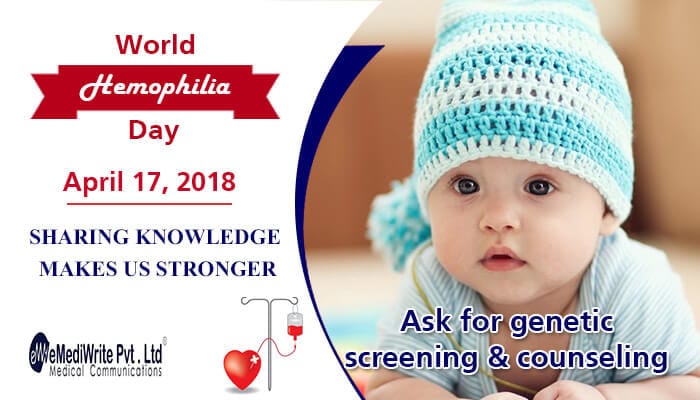
What is Hemophilla Hemophilia is not one disease but rather one of a group of inherited bleeding disorders that cause abnormal or exaggerated bleeding and poor blood clotting. About one in 10,000 people are born with this disease. It happens because of a defect in one of the clotting factor genes on the X chromosome. Types The three forms of hemophilia are hemophilia A, B, and C. Symptoms Diagnosis Blood tests can provide information about how long it takes for blood to clot, the levels of clotting factors, and which clotting factors, if any, are missing. Treatment Hemophilia A can be treated with a prescription hormone. This hormone is called desmopressin, which they can give as an injection into your vein. This medication works by stimulating the factors responsible for the process of blood clotting. Hemophilia B can be treated by infusing your blood with donor clotting factors. Sometimes, the factors may be given in the synthetic form. These are called “recombinant clotting factors.” Hemophilia C can be treated by using plasma infusion. The infusion works to stop profuse bleeding. Living with hemophilia This condition isn’t curable, but it can be treated to minimize symptoms and prevent future health complications. These include: Every year, April 17 is celebrated as World Hemophilia Day. This year’s theme is “SHARING KNOWLEDGE MAKES US STRONGER”.

Factors that influence the market cap of pharmaceutical companies

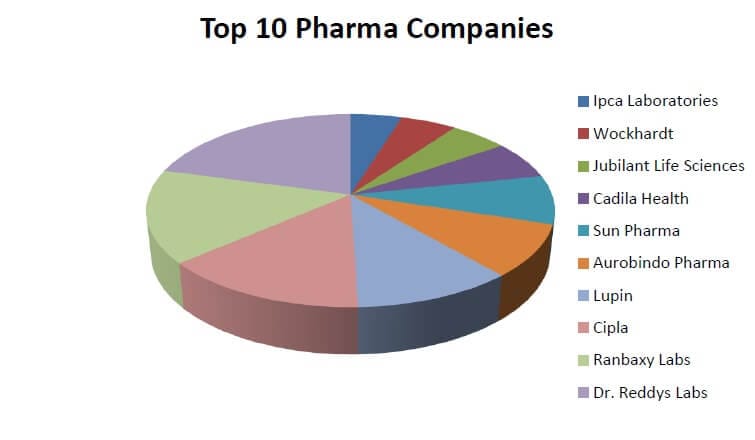
The global Pharmaceutical industry is one of the most dynamic, turbulent and complex economic space in the modern times. A typical Pharmaceutical company invests millions in research & development, therefore sound knowledge of the global trends of the factors affecting the market capitalization are important in strategizing business advancement: 1) Research & Development: According to Pharmaceutical Manufacturers Association, the leading expenditure in this industry is on research & development. After the trials, the company gets one year’s patent protection before the competitors are allowed the rights to manufacture and market equivalent drugs at half the price. 2) The patient-first business model: This model is increasingly being preferred over the traditional approach of sales regulation through health practitioners. With digital media providing health awareness in a click, more emphasis is being given on individual patient collaboration and effective communication. Pharmaceutical data analytics are becoming more relevant to regulate commercial success. 3) Introduction of biosimilars: The rapid Introduction of biosimilars has made the market tenfold times competitive. Drugs for debilitating disorders are made available at much cheaper pricing than the pricing of the patent companies. 4) Precision medicines: Pharmaceutical companies are investing massively on precision medicines, as trial and error procedural costs are eliminated and target-based concise treatment strategy is ensured, tailor-made to the patient’s requirements. 5) The digitalization of the health care sector: Starting from electronic records to genome mapping, digitalization has phenomenally revolutionized the industry. Mobile health sensors and wearable devices, offers end to end monitoring of a patient’s progress. 6) Government Regulations & Marketing: Over the decade, the demand for heavily marketed lifestyle drugs has increased consumer acceptance. There is massive demand for drugs that are claimed to enhance preventive approach and improve the quality of life. Therefore, effective marketing and sales strategy to target lifestyle drugs are on the go. Incorporation and careful consideration of all these factors are imperative for the strategic pricing and market cap monitoring of the pharmaceutical industry.

Taking Pride in Providing Outstanding Quality at the Appropriate Time

A professional portrait of Dr. Kamal Asnani standing in a modern office, wearing a suit and glasses. The image includes a desk with books, a tablet showing a medical graph, and large windows with a city view.

Since 2016, eMediWrite has been providing customers with medical marketing and scientific solutions through a wide range of print, electronic, and digital communication channels. Additionally, they serve as a source for original scripts written by researchers, scientific literature research, textbook content, book chapters, editing manuscripts before submission to journals, and publishing preparation. Dr. Kamal Asnani, the founder and CEO of eMediWrite, is a former non-resident Indian who graduated from the University of the West Indies with an MBBS in 1994, and returned to India after successfully practising medicine in Kingston, Jamaica, for seven years. He engaged in numerous commercial endeavours while he was in India, each of which added to his knowledge and experience and set the path for him to significantly advance the field of medicine and healthcare through strategic communications. He is best characterised as a learning machine and thrives on various self-development themes with a wide range of interests. His daily activities are guided by the key ideals of good corporate governance, sustainability, transparency, and thought leadership. His goal is to keep paving the route to a promising future with a history of solid alliances with industry titans in pharmaceuticals and healthcare. He believes that India as a nation has great potential, not just in the healthcare industry but in many other important fields as well. According to Dr. Asnani, we hope that the right people are given the opportunity to serve the country in a meaningful way. By providing thorough healthcare communications, eMediWrite seeks to empower mankind and establish enduring bonds with its customers. Because the circumstances are so favourable for learning, Dr. Asnani is a strong proponent of expanding one’s knowledge base. eMediWrite has a very strong medical command in the market thanks in part to having a medical degree holder at the helm. The company has been able to deliver the synergy that helps the industry in a significant way by partnering and forming strong relationships with other leaders, deepening the significance of eMediWrite’s journey. Their top priority is customer satisfaction. Today, eMediWrite is a success story that would not be feasible without the help of the loyal customers and committed staff members who have travelled along for the fantastic ride so far. The business is eager to support and interact with them in the future, along with other stakeholders. The organisation places a high priority on its duty to the clients it serves, funding efforts that are centred on the newest technology as well as introducing programmes that cover all facets of the healthcare industry.