Navigating Regulatory Challenges: How eMediWrite Helps Pharma Marketers Stay Compliant and Ahead
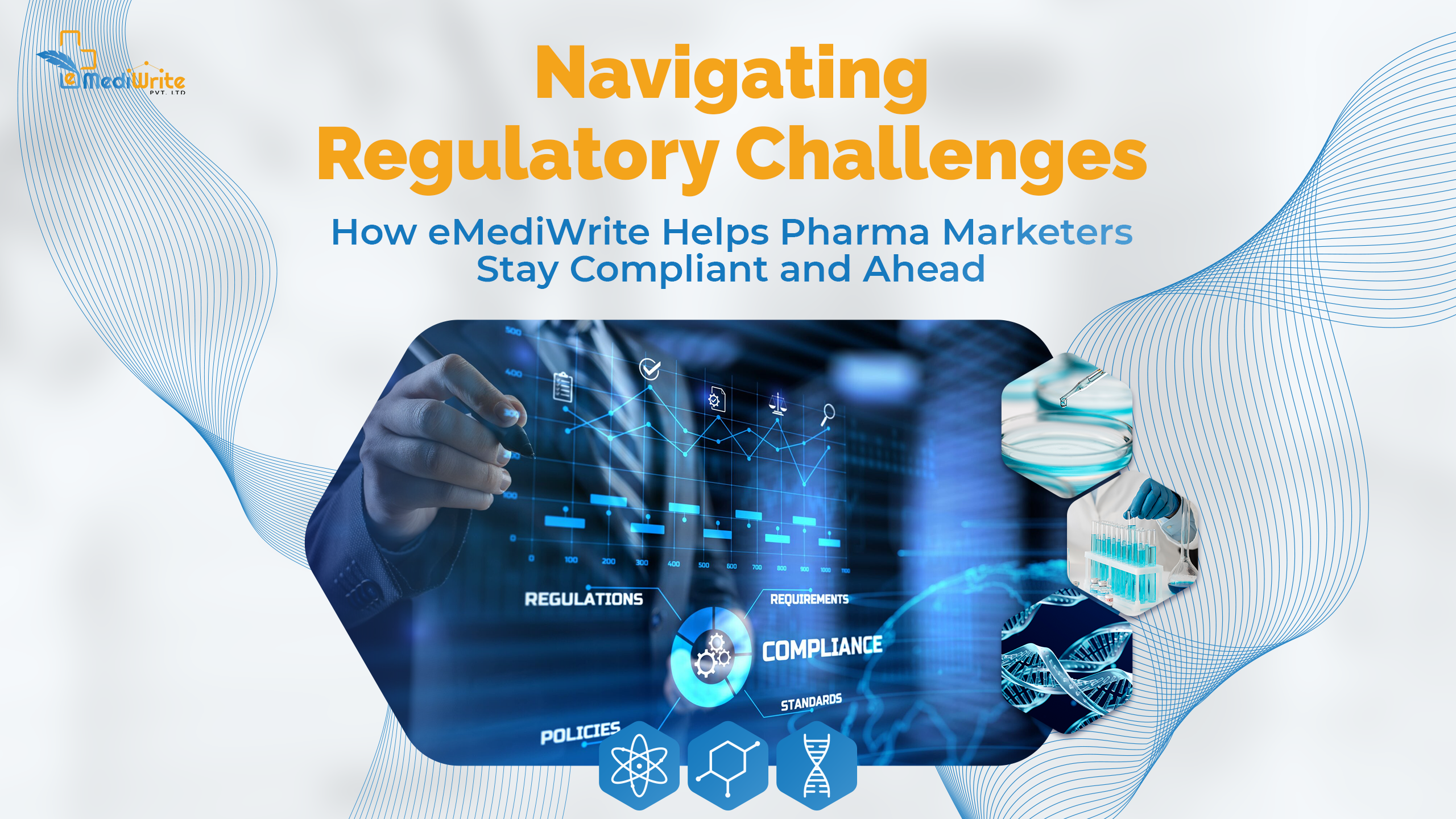
Businessperson reviewing digital compliance dashboard for pharma marketing regulatory challenges.

Introduction to Regulatory Challenges in Pharma Marketing Pharmaceutical marketing operates in one of the most tightly regulated industries in the world a landscape where innovation meets compliance and where every message must pass through layers of scrutiny before reaching healthcare professionals or patients. For marketers, navigating regulatory challenges can feel like walking a tightrope. One unverified claim, missing disclaimer, or off-label statement can result in penalties, legal action, or long-term reputational damage. To thrive in this demanding environment, pharma marketers need more than creative brilliance they need deep knowledge of regulatory compliance in pharma, well-defined approval processes, and technology that makes compliance effortless. That’s exactly what eMediWrite delivers: empowering pharma marketers to overcome regulatory challenges with confidence while crafting impactful, ethical, and compliant campaigns that drive results. What Are Regulatory Challenges in Pharma Marketing? Pharma marketing stands apart from other industries because its communications directly influence patient safety, healthcare decisions, and professional trust. The regulatory challenges in healthcare are not mere administrative barriers they are essential safeguards to ensure that all marketing information is scientifically sound and ethically responsible. Key Regulatory Challenges Include: Each of these regulatory challenges reinforces the need for a compliance-first approach one that maintains creativity without compromising integrity. Also Read This: 5 Strategies for Balancing Pharma Product Innovation with Regulatory Body Mandates. The Role of Regulatory Compliance in Pharma In pharma, regulatory compliance is far more than a box-checking exercise. It is the foundation of trust, ethics, and scientific transparency. A compliant strategy ensures that marketing materials meet strict regulatory expectations set by agencies such as the FDA, EMA, and MHRA and that they accurately reflect clinical evidence. Ignoring or overlooking compliance can lead to: Conversely, regulatory compliance in pharma builds long-term trust with healthcare professionals and patients, positioning a brand as credible and responsible. Compliance doesn’t limit creativity it strengthens it, providing marketers with a trusted framework to innovate responsibly. Also Read This: Strategies That Work: The Role of Content Marketing in Healthcare Key Regulatory Compliance Areas in Pharma Marketing Pharma marketers must focus on these essential areas to achieve consistent compliance: By integrating these principles, marketers can overcome regulatory challenges in healthcare while maintaining agility and creativity in campaign development. Also Read This: The Road to Building a Leading Pharma Brand: A Product Manager\’s Guide How Healthcare Marketing Compliance Differs from Other Industries Why Is Healthcare Marketing Compliance Critical? Unlike retail or consumer marketing, where persuasion is key, healthcare marketing is rooted in responsibility. Healthcare marketing compliance ensures that every communication reflects clinical truth and ethical standards, protecting both patients and professionals. Pharma marketers must walk a fine line between storytelling and science. A single compliance misstep such as overstating benefits or omitting safety information can trigger regulatory action and damage years of brand trust. Because healthcare communication influences real-world decisions, pharmaceutical marketing compliance is held to the highest possible standard. Marketers are not simply promoting products; they are shaping messages that can impact lives. Maintaining healthcare marketing compliance therefore becomes not just a legal duty, but a moral and strategic commitment reinforcing transparency, trust, and long-term success. Also Read This: How Pharma Marketing Teams Actually Win: Pharma Branding Strategies 2025 How Does eMediWrite Help Pharma Marketers Stay Compliant? In a fast-changing regulatory environment, traditional manual methods can no longer keep pace. eMediWrite was built specifically to help pharma marketers manage regulatory challenges more efficiently, ensuring accuracy, accountability, and speed throughout every campaign stage. By combining automation with industry expertise, eMediWrite transforms regulatory compliance in pharma from a burden into a business advantage empowering teams to focus on creativity while staying fully compliant. eMediWrite’s Features for Ensuring Compliance With these tools, eMediWrite turns compliance into an enabler allowing marketers to build campaigns that are both bold and fully compliant. Why Should Pharma Marketers Choose eMediWrite for Regulatory Compliance? Pharma marketers choose eMediWrite because it combines automation, accuracy, and deep regulatory understanding giving them a strategic edge in overcoming regulatory challenges in healthcare. With eMediWrite, marketers can: In essence, eMediWrite is not just software it’s a compliance ally designed to make regulatory compliance in pharma simple, scalable, and sustainable. Conclusion: Turning Compliance into a Catalyst for Success Regulatory challenges in healthcare may be complex, but they don’t have to hold marketers back. With the right approach, compliance can evolve from an obstacle into a powerful driver of credibility and trust. eMediWrite empowers pharma marketers to navigate regulatory challenges with confidence ensuring every campaign is compliant, ethical, and effective. In a world where every word matters, eMediWrite helps you turn regulatory compliance in pharma into a strategic advantage keeping your brand credible, compliant, and ahead of the curve. FAQ What are the biggest regulatory challenges pharma marketers face? The biggest regulatory challenges include ensuring scientific accuracy, avoiding off-label promotion, maintaining patient data privacy, and managing complex approval workflows across digital and traditional channels. How can healthcare marketing compliance impact a pharmaceutical business? Strong healthcare marketing compliance enhances brand trust, reduces risk, and ensures longevity. Non-compliance, however, can result in fines, lawsuits, and reputational damage. What role does eMediWrite play in ensuring regulatory compliance for pharma marketers? eMediWrite automates compliance checks, streamlines approvals, and ensures every campaign adheres to regulatory compliance in pharma standards reducing manual effort and increasing efficiency. What are the key regulatory compliance areas pharma marketers must focus on? Content accuracy, patient privacy, approval documentation, and digital oversight are central to pharmaceutical marketing compliance. How does eMediWrite make regulatory compliance easier for pharma marketers? Through automation, audit trails, and real-time updates, eMediWrite simplifies regulatory challenges, helping teams stay compliant and creative simultaneously. Can eMediWrite help with compliance for both digital and traditional pharma marketing? Yes. eMediWrite supports compliance for both digital channels (social media, email, websites) and traditional materials such as brochures, presentations, and print ads. 
How Pharma Marketing Teams Actually Win: Pharma Branding Strategies 2025

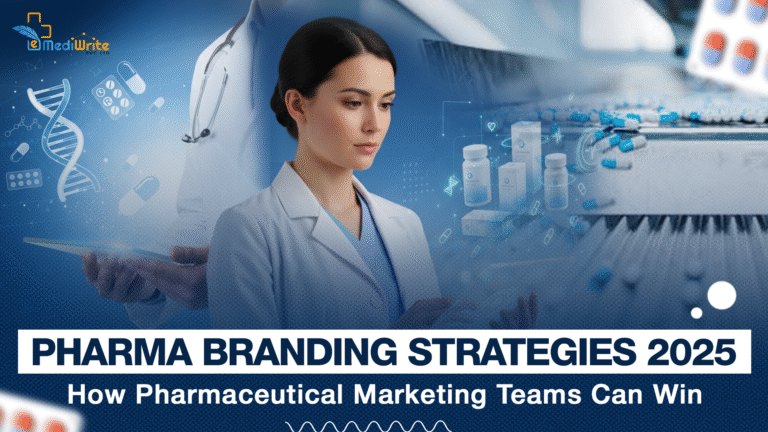
A promotional image with a doctor and the title "PHARMA BRANDING STRATEGIES 2025.

In today’s competitive healthcare market, pharma branding strategies are no longer just about promoting a product, they’re about building trust, credibility, and long-term value. With the rise of digital-first communication and increasing regulatory scrutiny, pharmaceutical marketing teams must adopt smarter, patient-centric, and evidence-based approaches. This comprehensive guide explores the latest pharma branding strategies in 2025 and how teams can leverage effective pharmaceutical brand management to achieve sustainable success. Why Pharma Branding Strategies Matter in 2025 The pharmaceutical industry is experiencing a fundamental shift from product-centric promotion to value-driven pharmaceutical brand building. Physicians, patients, and healthcare providers are demanding more than just efficacy; they want authentic communication, reliable information, and meaningful human connections. Strong pharma branding strategies create differentiation in crowded therapeutic categories, strengthen HCP relationships, and build long-term loyalty that drives revenue growth. As the market becomes increasingly competitive, pharmaceutical brand management has evolved into a strategic necessity that encompasses digital innovation, patient-centricity, and evidence-based communication. Also Read This: 5 DIGITAL MARKETING TIPS FOR THE PHARMA INDUSTRY Essential Pharma Branding Strategies for 2025 1. Patient-Centric Storytelling and Brand Building Patients are no longer passive recipients of treatment. They are empowered decision-makers who actively research their health conditions. Modern pharma branding strategies must develop compelling narratives that highlight patient outcomes, lifestyle improvements, and emotional connections. Effective pharmaceutical brand building requires storytelling that blends scientific data with human experience, creating authenticity and resonance that drives engagement. eMediWrite’s medical communication expertise helps pharmaceutical companies craft patient-centric narratives that build trust and demonstrate real-world value. 2. Digital Pharmaceutical Branding and Transformation Digital pharma transformation has accelerated dramatically, reshaping how pharmaceutical companies engage with stakeholders. From medical content marketing to AI-driven insights, digital pharmaceutical branding strategies must integrate seamlessly across every touchpoint. Key components of successful digital pharma transformation include: 3. Evidence-Based Healthcare Communication Trust remains the foundation of successful pharmaceutical brand management. Every communication must be backed by credible clinical data, regulatory compliance, and transparent messaging. Whether targeting healthcare professionals or patients, teams must ensure scientific accuracy while maintaining clear, engaging language. Best practices for evidence-based communication: Professional medical marketing services ensure that pharmaceutical brands communicate complex scientific information effectively while meeting strict regulatory requirements. 4. Advanced HCP Engagement Beyond Traditional Detailing Healthcare professionals expect sophisticated, value-driven interactions that go beyond traditional sales approaches. Modern pharma branding strategies incorporate digital touchpoints, educational content, and scientific collaborations that position pharmaceutical companies as trusted knowledge partners. Innovative HCP engagement strategies include: 5. Balancing Compliance with Creative Excellence One of the most significant challenges in pharmaceutical brand management involves balancing strict regulatory compliance with creative, emotionally resonant campaigns. Regulatory frameworks demand accuracy and transparency, while audiences seek emotional connection and memorable experiences. Successful pharmaceutical brand building teams create compliant yet compelling campaigns that engage stakeholders without overpromising outcomes or violating industry guidelines. Also Read This: The Role of Content Marketing in Healthcare Emerging Trends Shaping Pharma Branding Strategies AI-Powered Personalization and Data Analytics Artificial intelligence and machine learning are revolutionizing pharmaceutical marketing strategy by enabling hyper-personalized communications. Advanced analytics help brands understand individual patient journeys, predict HCP preferences, and optimize engagement strategies in real-time. Omnichannel Digital Experiences Digital pharmaceutical branding now requires seamless integration across multiple platforms and touchpoints. Successful brands create cohesive experiences that guide stakeholders through personalized journeys, whether they’re researching treatments online, attending virtual events, or engaging with mobile applications. Sustainability and Corporate Responsibility Modern pharmaceutical brand building increasingly emphasizes environmental sustainability and social responsibility. Companies that demonstrate genuine commitment to sustainable practices, ethical clinical trials, and community health initiatives build stronger brand loyalty and trust. Here You Can Read: WHO Marketing Authorization Guidelines Strategic Action Plan for Pharmaceutical Brand Management To excel in 2025’s competitive landscape, pharmaceutical brand management teams should implement a comprehensive strategy that includes: Assessment and Planning Digital Integration and Transformation Team Development and Training Specialized pharmaceutical marketing training helps teams build the skills necessary to navigate complex regulatory environments while creating compelling brand experiences. How eMediWrite Empowers Your Pharma Branding Strategies As a leading ISO 9001:2015–certified medical communications agency, eMediWrite specializes in developing comprehensive pharma branding strategies that drive measurable results for pharmaceutical, biotech, and healthcare organizations. Our expert team blends deep scientific knowledge with strategic marketing expertise to deliver end-to-end pharmaceutical brand management solutions from evidence-based brand narratives and regulatory-compliant medical writing to interactive digital campaigns and omnichannel engagement. Whether you need strategic brand positioning, digital pharma transformation, or KOL engagement programs, eMediWrite ensures every communication builds trust, resonates with healthcare professionals, and accelerates market success. With over 1,200 successful client engagements and 511 completed cases across diverse therapeutic areas, eMediWrite’s integrated approach combines creative services, advanced analytics, and regulatory expertise to maintain compliance while maximizing impact. Our pharmaceutical marketing strategy frameworks differentiate products in competitive markets, and our digital pharmaceutical branding initiatives leverage SEO, social media, and AI-driven insights to create personalized patient and HCP journeys. Ready to elevate your brand? Partner with eMediWrite to transform complex science into compelling stories that drive growth and long-term value. Conclusion Pharma branding strategies in 2025 center on authentic value creation, digital pharmaceutical branding innovation, and meaningful human connections. Teams that master comprehensive pharmaceutical marketing strategy—from patient-centric storytelling to evidence-based healthcare communication—will maintain competitive advantages in an increasingly complex marketplace. In an environment where trust defines brand loyalty and digital pharma transformation accelerates rapidly, robust pharmaceutical brand management and strategic pharmaceutical brand building aren’t optional—they’re essential for sustainable growth and market leadership. Frequently Asked Questions About Pharma Branding Strategies 1. What are the most effective pharma branding strategies for 2025? The most effective pharma branding strategies for 2025 include patient-centric storytelling, digital pharmaceutical branding, evidence-based communication, and advanced HCP engagement. Successful pharmaceutical brand management focuses on building trust through transparent messaging, leveraging digital transformation technologies, and creating personalized stakeholder experiences that address specific therapeutic needs. 2. How does digital pharma transformation impact brand building? Digital pharma transformation revolutionizes pharmaceutical brand building by enabling personalized communication, real-time engagement analytics, and omnichannel experiences. Modern digital pharmaceutical branding strategies utilize AI-driven insights, … Read more

Strategies That Work: The Role of Content Marketing in Healthcare

Healthcare professionals engaging in discussion with patient, overlaid with medical icons and text highlighting strategies in content creation in healthcare, emphasizing insightful and empowering healthcare content by eMediWrite.

Content Marketing in Healthcare In today’s competitive pharma landscape, standing out is tough. Doctors and patients are flooded with information daily. This is where content marketing in healthcare makes the difference. Done strategically, it informs, builds trust, and drives recall. From patient guides to doctor webinars, the right content can elevate your brand credibility and engagement. Why Healthcare Needs Content Marketing Healthcare depends on credibility. A misplaced claim or outdated data can erode trust instantly. Effective healthcare content marketing strategies help: A campaign using patient explainer videos recently saw 30% higher engagement than traditional brochures, proving the value of the right content format. Winning Healthcare Content Strategies Content Formats That Work Best Choosing the right content format is critical to engage doctors and patients effectively.   Picking the right mix ensures your healthcare content marketing meets both engagement and business goals. Patient-Centric Content Approaches Patient-focused content goes beyond information, it addresses concerns, simplifies treatments, and answers common questions. Tools like tear-off pads, symptom checkers, educational guides, and FAQs improve understanding and adherence, positioning the brand as a trusted healthcare partner rather than just a product provider. Medical Content Creation Tips for Accuracy and Trust Accuracy is essential. Using verified sources, collaborating with medical experts, and keeping language clear ensures reliability. Reviewing for compliance before publishing builds credibility. Following these medical content creation tips helps maintain trust while effectively communicating with doctors and patients. Social Media Tactics for Healthcare Marketing Social media has become a powerful tool for healthcare engagement. LinkedIn helps connect with professionals, Instagram reaches younger patients visually, and YouTube supports healthcare video marketing strategies. Sharing verified updates, patient stories, or hosting live Q&A sessions builds communities and strengthens trust without over-relying on direct promotion. The Role of Healthcare Video Marketing Strategies Emerging Healthcare Marketing Trends Personalization and Patient Experience Personalized communication is shaping the future of healthcare marketing. Targeted campaigns, tailored resources, and customized emails improve engagement. Patients and doctors are more likely to respond to content that feels relevant to their needs, reflecting one of the most significant healthcare marketing trends in 2025. Rise of Data-Driven Content Data is transforming how brands approach content. Analytics help track engagement, understand audience preferences, and refine messaging. By leveraging insights, healthcare content marketing strategies become more precise and impactful, reaching the right people with the right content at the right time. Overcoming Healthcare Marketing Challenges Compliance is a major hurdle. Balancing creativity with regulatory requirements is essential. Another challenge is credibility; with many brands competing for attention, delivering consistent, accurate, and valuable content is what sets a brand apart. Addressing these healthcare marketing challenges ensures content resonates and maintains trust. How eMediWrite Supports Healthcare Content Marketing At eMediWrite, we specialize in delivering impactful, compliant, and credible medical content tailored to the needs of healthcare brands. Whether it’s offering practical medical content creation tips or driving full-scale campaign execution, we empower organizations to engage meaningfully with both doctors and patients. Our approach blends creativity with scientific accuracy, ensuring every piece of content not only resonates but also delivers measurable results. With a focus on trust, compliance, and long-term value, eMediWrite is your partner in building stronger connections across the healthcare ecosystem. Conclusion Content marketing in healthcare is essential for credibility, engagement, and measurable impact. By following well-planned healthcare content marketing strategies, addressing healthcare marketing challenges, adopting the latest healthcare marketing trends, and using healthcare video marketing strategies, brands can effectively connect with both doctors and patients. Accurate, patient-focused content is the key to future success. Further Resources Frequently Asked Questions Q1: What is Content Marketing in Healthcare and why is it important? Content marketing in healthcare means creating and sharing patient-focused, accurate, and engaging resources like infographics, explainer videos, or webinars. It simplifies complex therapies, builds brand credibility, and fosters long-term trust among patients and healthcare professionals. Q2: Which Healthcare content marketing strategies deliver the best ROI? The most impactful strategies include: When supported by data-driven insights, these approaches ensure precise targeting and measurable outcomes. Q3: What are the top Healthcare marketing trends to watch in 2025?  Keeping pace with these trends ensures relevance and sustainable growth. Q4: How can Healthcare social media marketing enhance patient engagement? By using: Q5: What are the main Healthcare marketing challenges and how can they be overcome? Challenges: Q6: Why should brands invest in Healthcare video marketing strategies? Videos, whether animated patient guides or real-world case studies make complex topics simple, connect emotionally, and improve recall. Adding video to patient education programs can drive up to 30% higher engagement. Q7: What are the best Medical content creation tips for ensuring accuracy and compliance?

What’s New In This Financial Year for Pharma Brands: How They Are Getting Smarter with AI and Automation

The pharma industry is undergoing an exciting transformation. This year, pharma brands aren’t just talking about AI and automation as futuristic buzzwords; they’re using these tools to create real, meaningful change for patients and healthcare providers. Helping Patients Before They Even Know They Need Help AI-powered predictive analytics are enabling brands to understand patient needs on a deeper level. By analyzing data from clinical trials and everyday patient experiences, companies can spot patterns and predict health issues before they arise. This means patients can receive personalized care sooner, leading to better outcomes and more peace of mind. Connecting in More Personal Ways On the front lines, AI is helping brands communicate with patients in more personal, supportive ways. Virtual assistants and intelligent chatbots can now answer questions, provide education, and guide patients through their treatment journey — all in real time and with a human touch. Making Medicine More Reliable and Accessible Automation is also working behind the scenes to ensure medicines get to patients faster and more safely. Smart robots and automated systems are reducing errors and keeping production running smoothly, so patients can trust that their treatments will be there when they need them most. Technology That Cares What’s most inspiring is that all these advancements are centred around one simple idea: caring for people. By embracing AI and automation, pharma brands are not just becoming more efficient; they’re becoming more compassionate, more attentive, and more human. This year, we’re seeing technology and empathy work hand in hand, promising a future where healthcare truly puts people first. Staying Compliant in a Changing World Pharma brands also face increasingly complex global regulations. AI helps them stay compliant more efficiently. Conclusion: What’s Changing? Dimension Traditional AI-Enabled Discovery 6–10 years 12–24 months Trials Costly, error-prone Smart, predictive, faster Manufacturing Human-reliant Predictive, automated Distribution Delayed, offline Real-time, smart Patient Support Manual follow-ups Personalized digital care ✅ Final Thought AI is not just enhancing reliability; it’s fundamentally democratizing access to healthcare, especially in underserved geographies.

5 Tips That Ensure Your Medical Communication Agency Provides Quality Medico-Marketing Promotions on Time

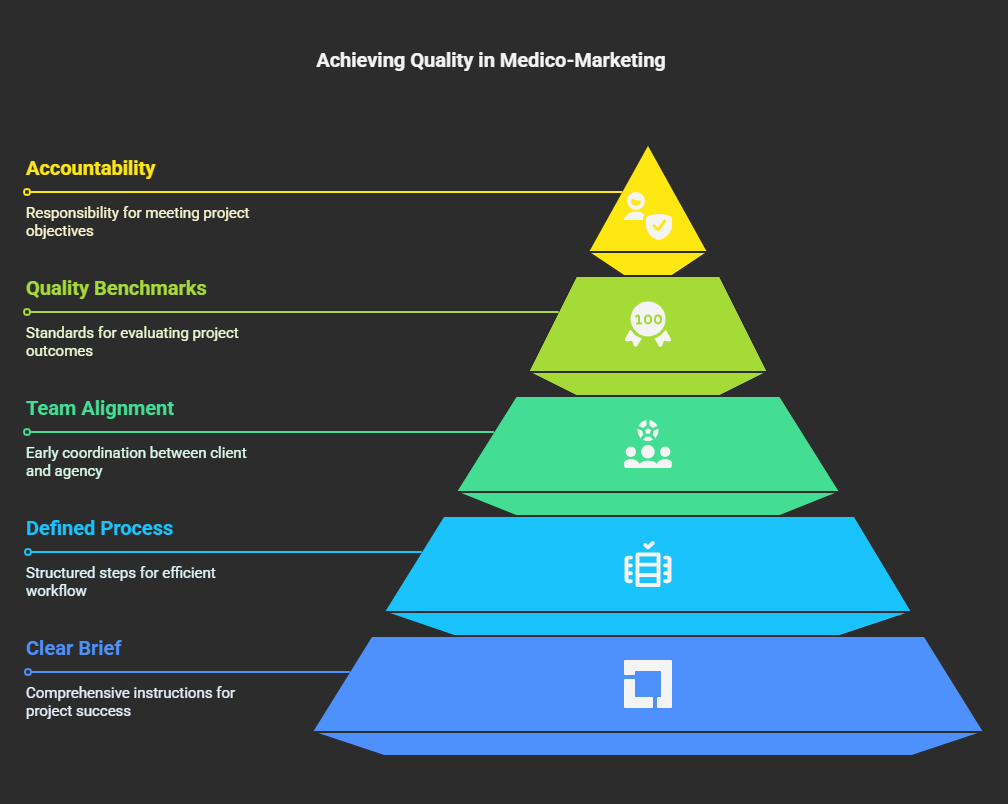
Tight timelines, legal requirements, and competitive brand positioning are all integral to the job description of a pharmaceutical marketer. Product launches can be derailed and brand reputations harmed by delays in medical content or subpar deliverables. How can you ensure your medical communication agency doesn’t act as a roadblock, but rather as a growth partner? These tried-and-true methods will ensure that you receive timely, high-quality medico-marketing materials that align with your brand goals. 1. Begin with a comprehensive and unambiguous brief.An intense brief produces excellent results. Make use of a uniform briefing template throughout your company. Include: 2. Create a specified procedure.Predictability is guaranteed by structure. A good agency will have a strong internal SOP that addresses: Timeline structure recommendation: 3. Align both teams early.Aligning expectations among the following can help to prevent last-minute chaos. Shared trackers (like Trello, Zoho, and Asana) and weekly calls facilitate deliverable management. These can include: 4. Establish quality standards.Give instances of “good” and “bad” collateral. Without a definition, quality is arbitrary. Ensure the agency is aware of your: 5. Include accountability in the framework.For transparency, make use of programs like ClickUp, Google Sheets, or dashboards tailored to your agency. Establish: Final Thought: From supplier to valuable partner.More than just a supplier, your med comm agency is an extension of your company’s identity. A partnership that grows with your marketing vision may be established with clarity, process, alignment, quality control, and accountability.

Patient-Centred Marketing: Shifting Focus from Products to People

In the evolving world of healthcare, one trend is reshaping how pharmaceutical brands engage the market: the shift from product-centred to patient-centred marketing. Gone are the days when success was defined solely by product efficacy or sales numbers. Today, the true differentiator is how well we understand, empathise with, and support the real people behind every prescription. Why the Shift Matters Pharmaceutical companies have traditionally marketed around molecules and mechanisms. But as patients become more informed, empowered, and engaged in their health decisions, they expect more than clinical data—they expect connection. Patient-centred marketing acknowledges that we’re not just selling a treatment; we’re contributing to someone’s quality of life. From Features to Feelings Instead of asking, “What does our product do?”, ask, “What does the patient need?” This shift changes everything: Humanizing the Journey Patient-centred marketing means linking science to real patient experiences: When we answer these questions, we build trust—a critical currency in healthcare. Business Value Meets Human Value There’s also a practical advantage: patient-centred brands build loyalty, enhance adherence, and gain advocacy. A 2023 Deloitte study found that pharma companies investing in patient experience outperform peers in long-term brand equity and HCP trust. Patients who feel heard and supported are more likely to stay on therapy, engage with educational tools, and recommend the brand to others. Bringing It to Life Here are a few examples of how brands are embracing the shift: Patient-centred marketing isn’t a trend—it’s the smarter, kinder way to build healthcare brands.When we focus on people, not just products, we create real connections—because behind every treatment is a human being

What Will the Future Hold for Pharma Marketing in 2025?

Pharmaceutical marketing is evolving rapidly, driven by technological advancements, shifting doctor preferences, and heightened regulatory scrutiny. As we step into 2025, here are the key trends shaping the future of pharmaceutical marketing. AI-Driven Personalization in Doctor Engagement* Artificial Intelligence (AI) is transforming the way pharmaceutical brands interact with healthcare professionals (HCPs). AI-powered tools analyse vast amounts of data to deliver personalised content, ensuring relevant and timely engagement. Rise of Omnichannel Marketing Strategies* Gone are the days when the pharmaceutical industry relied solely on sales representatives and conferences. By 2025, an integrated omnichannel approach will be the dominant strategy, ensuring consistent messaging across multiple touchpoints. Growth of AI-Generated & Interactive Content* HCPs prefer scientifically accurate, concise, and interactive content over traditional print materials, such as brochures. Ethical Use of Big Data for Precision Marketing* Pharma marketers now have access to massive datasets from electronic health records (EHRs), social media, and prescribing trends. However, ethical data usage is crucial to maintain compliance. Increased Focus on Patient-Centric Marketing* While HCP engagement remains a priority, patient-centric strategies are gaining momentum. The future of pharma marketing in 2025 revolves around AI-driven personalization, omnichannel strategies, interactive content, ethical data use, and patient-centric approaches. Companies that adapt to these trends will see better engagement, compliance, and overall marketing success. At eMediWrite, we help pharma brands navigate these evolving trends with tailored marketing solutions that drive real impact.  References*[1] McKinsey & Company. (2023). “AI in Pharma Marketing: The Next Frontier.” [2] Journal of Medical Marketing. (2023). “Omnichannel Approaches in Pharma: A New Paradigm.” [3] Deloitte Insights. (2024). “The Power of Interactive Content in Healthcare Marketing.” [4] IQVIA. (2024). Data-Driven Marketing Strategies for Pharmaceutical Brands. [5] PharmaVoice. (2023). “The Role of Patient Engagement in Prescriber Decisions.”

Stuck in Year-End Chaos? Smart Moves to Stay Ahead!

As the financial year comes to a close, product managers find themselves juggling multiple priorities—finalising planned activities, ensuring budgets are utilised wisely, and setting the stage for the next quarter. The pressure is real, but you can navigate this phase smoothly with the right approach.Here are some points that you can consider: 1. Prioritize Pending Plans Review your planned activities and categorize them into “Must-Do” and “Can-Defer.” Focus on high-impact initiatives that align with your brand’s growth strategy. 2. Smart Budget Utilization Instead of rushing to exhaust budgets, channel resources into impactful inputs—doctor engagement activities, scientific content, or digital assets that add long-term value. Having the right partners can make execution seamless. 3. Next Month’s Strategy Plan your April inputs now. Identify gaps in the market, gather field insights, and align with medical reps to ensure a strong start to the next financial year. If time is a constraint, collaborating with a medical communications agency can help execute your plans efficiently. 4. Data-Driven Planning Analyze this year’s performance—what worked, what didn’t? Use these insights to craft a strategic roadmap for the upcoming months. External content development and marketing strategy expertise can add value to this process. 5. Align with Teams Effective execution needs cross-functional alignment. Coordinate with marketing, sales, and medical teams to ensure smooth transitions and clear objectives. With the right resources and expert support, a structured approach can make all the difference. With structured planning and the right collaborations, product managers can confidently close the year and enter the next with a clear vision. *eMediWrite is a medical communications company which helps pharma in their marketing activities from ideation to execution.

DERMACON’2025: eMediWrite’s Journey Through Innovation in Dermatology

The vibrant city of Jaipur witnessed an extraordinary convergence of dermatology experts, innovators, and industry leaders at DERMACON’2025. As one of India’s most prestigious dermatology conferences, this event provided a unique platform to explore cutting-edge advancements, new treatment modalities, and emerging trends shaping the future of skin health. At eMediWrite, we specialise in medical communications, bridging the gap between scientific expertise and engaging content. Our team was thrilled to be part of DERMACON’2025, interacting with dermatologists, researchers, and pharmaceutical professionals to understand their evolving needs in dermatology. A Glimpse into DERMACON 2025 🌟 Scientific Excellence on Display The conference featured ground-breaking research presentations, live demonstrations, and expert panel discussions on the latest advancements in dermatology, aesthetics, and skin therapy. The event showcased game-changing innovations in skin health, from AI-powered diagnostic tools to next-gen biologics for psoriasis. 🔬 Emerging Trends in Dermatology Some of the hottest topics at DERMACON’2025 included: ✅ Personalized Skincare & Precision Medicine – Tailoring treatments based on genetic profiles. ✅ Regenerative Dermatology – Stem cell therapy and exosome-based skin rejuvenation. ✅ Cosmeceuticals & Aesthetic Dermatology – The rise of evidence-based skincare. ✅ Dermato-Oncology – Advances in the early detection and treatment of skin cancers. 👩‍⚕️ Engaging with Experts Our team had the privilege of interacting with renowned dermatologists and pharma leaders to discuss the evolving role of medical content in dermatology marketing. The insights gained will shape our approach to creating impactful and scientifically accurate content for dermatology brands. Looking Ahead: Beyond DERMACON 2025 The insights from DERMACON‘2025 highlight the growing need for clear, engaging, and strategic medical communication in dermatology. As innovations in skincare and treatment continue to advance, dermatology brands require compelling, science-backed narratives to connect with their audience effectively.Whether it’s medical content, brand storytelling, or digital strategy, eMediWrite is committed to helping dermatology brands stand out with impactful communication.

Turning ‘No’ Into ‘Yes’: How Product Managers Can Pitch Ideas That Win

One of the most persistent challenges for product managers is securing top management’s approval for their ideas. Despite the time and effort spent crafting innovative solutions, ideas often face rejection due to misaligned priorities, unclear value propositions, or concerns about feasibility and cost. This can be disheartening and slow progress, leaving even the most promising concepts unrealised. Understanding the Challenges: Winning Strategies: ConclusionGetting ideas approved isn’t just about having great concepts; it’s about presenting them strategically. By aligning with company priorities, supporting pitches with data, and addressing concerns proactively, product managers can turn a “no” into a “yes,” ensuring their ideas drive meaningful change and success