
The Untold Power of Public Relations in the Medical World

Two professionals, one in a doctor's coat and one in a suit, shaking hands while other medical staff stand in the blurred background.

Public Relations in the Medical Field In an era where trust, transparency, and credibility shape the success of healthcare and pharmaceutical organizations, public relations in the medical field has emerged as a cornerstone of effective communication. It bridges the gap between medical professionals, patients, and the public ensuring accurate information, ethical storytelling, and lasting relationships. Whether you’re a hospital, healthcare start up, or global pharma brand, strong medical public relation practices help build a reputation rooted in authenticity, reliability, and care. Why Public Relations Is Crucial for the Medical Industry? The healthcare sector deals with sensitive information and life-impacting decisions. Miscommunication or misinformation can erode public trust instantly. That’s why public relations in healthcare is not just about promotion it’s about maintaining credibility and fostering confidence among patients, partners, and the public. Through strategic communication, PR professionals ensure medical updates, breakthroughs, and innovations are presented clearly, ethically, and responsibly. The goal is to educate, not just advertise and that’s what makes public relations in the medical field indispensable. Key Components of Healthcare Public Relations Building an impactful healthcare public relations strategy requires a mix of strong media outreach, trust-building communication, and crisis preparedness. Media Relations and Its Importance in Healthcare PR Media relations play a vital role in shaping how healthcare brands are perceived. Journalists and medical publications serve as conduits between your organization and the public. In public relations in healthcare, media partnerships can amplify visibility for: Consistent, transparent engagement with media professionals helps ensure accurate representation and fosters long-term credibility a crucial aspect of medical public relation. Building Credibility through Healthcare Public Relations Credibility is the currency of the healthcare world. Patients and practitioners rely on trustworthy sources when making decisions about treatments, hospitals, or medications. Through expert interviews, press releases, and educational content, healthcare public relations strategy builds thought leadership for medical organizations. When the public sees a brand actively contributing to health education and scientific discourse, trust naturally follows. Also Read This: Turning ‘No’ Into ‘Yes’: How Product Managers Can Pitch Ideas That Win Developing an Effective Healthcare Relationship Management Strategy Beyond traditional media outreach, successful public relations in the medical field relies on strong healthcare relationship management. This involves nurturing long-term relationships with key stakeholders including patients, healthcare professionals, regulators, and community partners. A solid healthcare relationship management framework enables organizations to: Best Practices for Relationship Management in Healthcare PR To strengthen relationships through medical public relation efforts: When executed well, healthcare relationship management becomes the backbone of a resilient healthcare PR strategy. Also Read This: Navigating Regulatory Challenges: How eMediWrite Helps Pharma Marketers Stay Compliant and Ahead The Role of Public Relations in Pharmaceutical Marketing In the pharmaceutical industry, public relations in healthcare goes beyond product promotion it builds trust around science, safety, and patient outcomes. Pharma companies rely on public relations in the medical field to communicate research findings, address public health concerns, and demonstrate corporate responsibility. Leveraging Public Relations for Pharmaceutical Brand Awareness Medical public relation plays a critical role in boosting brand visibility while maintaining ethical boundaries. A strong PR approach helps pharmaceutical brands: By merging medical accuracy with engaging narratives, public relations in pharmaceutical marketing transforms complex data into compelling, human-centred communication. Also Read This: Pharma Branding Strategies 2025-2026 The Impact of Digital Media on Healthcare Public Relations Digital transformation has revolutionized public relations in healthcare. With patients increasingly turning to online sources for medical information, digital platforms have become central to healthcare communication. Through social media, online press releases, and digital storytelling, PR teams can reach broader audiences faster and more effectively. Online engagement also enables real-time feedback, helping brands adapt communication strategies promptly. Modern healthcare public relations strategy now integrates content marketing, influencer collaborations, and data-driven analytics ensuring every message aligns with audience interests and ethical guidelines. Also Read This: The Role of Content Marketing in Healthcare How Healthcare PR Can Influence Public Perception of Medical Brands Public perception is often shaped not just by what an organization does, but by how it communicates. In healthcare, perception directly impacts patient confidence, referral rates, and even treatment outcomes. Strategic public relations in the medical field helps shape this perception positively by: An effective medical public relation strategy reinforces trust, ensuring that both professionals and patients view the brand as credible, compassionate, and committed to health improvement. How Can eMediWrite Assist You with Healthcare Public Relations? eMediWrite offers comprehensive support for organizations seeking to strengthen their public relations in healthcare and pharmaceutical marketing. Here’s how eMediWrite empowers your PR efforts: By partnering with eMediWrite, your healthcare or pharma brand can navigate the complex PR landscape confidently ensuring every message is accurate, compliant, and impactful. Conclusion Public relations in the medical field is not just about publicity it’s about purpose-driven communication that builds trust, credibility, and long-term relationships. From healthcare relationship management to public relations in healthcare campaigns, effective PR ensures medical and pharmaceutical organizations communicate with clarity, empathy, and integrity. With the right strategy and support from experts like eMediWrite healthcare brands can elevate their visibility, strengthen trust, and make a lasting impact in the lives of patients and communities. Frequently Asked Questions (FAQs) What is the Role of Public Relations in the Medical Field? It involves building trust, managing media communications, and ensuring transparent, ethical information sharing between healthcare organizations and the public. How Does Public Relations Impact Pharmaceutical Marketing? Public relations in healthcare helps pharma brands establish credibility, communicate research outcomes, and manage reputation across audiences. What Are the Key Elements of Healthcare Public Relations Strategy? A strong healthcare public relations strategy includes media outreach, stakeholder engagement, content creation, and crisis management. How Can Healthcare Relationship Management Enhance PR Efforts? Healthcare relationship management strengthens communication channels with patients and partners, leading to higher trust and better brand loyalty. Why Should Pharmaceutical Brands Invest in Public Relations? It ensures transparency, builds public trust, enhances brand reputation, and supports ethical marketing initiatives. What Are the Best Practices for Healthcare Public Relations in the Digital Age? Adopt digital storytelling, engage … Read more
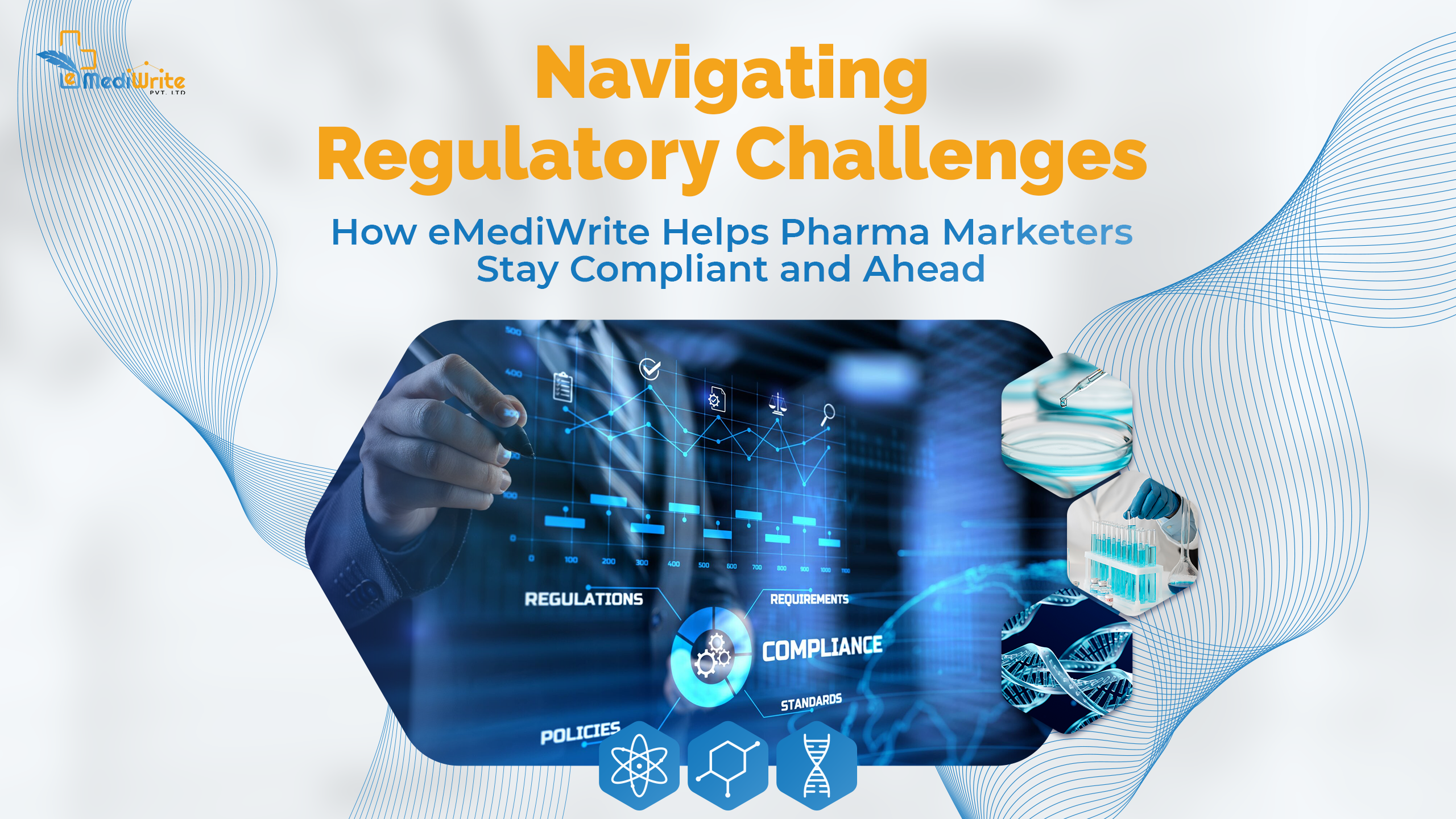

Navigating Regulatory Challenges: How eMediWrite Helps Pharma Marketers Stay Compliant and Ahead

Businessperson reviewing digital compliance dashboard for pharma marketing regulatory challenges.

Introduction to Regulatory Challenges in Pharma Marketing Pharmaceutical marketing operates in one of the most tightly regulated industries in the world a landscape where innovation meets compliance and where every message must pass through layers of scrutiny before reaching healthcare professionals or patients. For marketers, navigating regulatory challenges can feel like walking a tightrope. One unverified claim, missing disclaimer, or off-label statement can result in penalties, legal action, or long-term reputational damage. To thrive in this demanding environment, pharma marketers need more than creative brilliance they need deep knowledge of regulatory compliance in pharma, well-defined approval processes, and technology that makes compliance effortless. That’s exactly what eMediWrite delivers: empowering pharma marketers to overcome regulatory challenges with confidence while crafting impactful, ethical, and compliant campaigns that drive results. What Are Regulatory Challenges in Pharma Marketing? Pharma marketing stands apart from other industries because its communications directly influence patient safety, healthcare decisions, and professional trust. The regulatory challenges in healthcare are not mere administrative barriers they are essential safeguards to ensure that all marketing information is scientifically sound and ethically responsible. Key Regulatory Challenges Include: Each of these regulatory challenges reinforces the need for a compliance-first approach one that maintains creativity without compromising integrity. Also Read This: 5 Strategies for Balancing Pharma Product Innovation with Regulatory Body Mandates. The Role of Regulatory Compliance in Pharma In pharma, regulatory compliance is far more than a box-checking exercise. It is the foundation of trust, ethics, and scientific transparency. A compliant strategy ensures that marketing materials meet strict regulatory expectations set by agencies such as the FDA, EMA, and MHRA and that they accurately reflect clinical evidence. Ignoring or overlooking compliance can lead to: Conversely, regulatory compliance in pharma builds long-term trust with healthcare professionals and patients, positioning a brand as credible and responsible. Compliance doesn’t limit creativity it strengthens it, providing marketers with a trusted framework to innovate responsibly. Also Read This: Strategies That Work: The Role of Content Marketing in Healthcare Key Regulatory Compliance Areas in Pharma Marketing Pharma marketers must focus on these essential areas to achieve consistent compliance: By integrating these principles, marketers can overcome regulatory challenges in healthcare while maintaining agility and creativity in campaign development. Also Read This: The Road to Building a Leading Pharma Brand: A Product Manager\’s Guide How Healthcare Marketing Compliance Differs from Other Industries Why Is Healthcare Marketing Compliance Critical? Unlike retail or consumer marketing, where persuasion is key, healthcare marketing is rooted in responsibility. Healthcare marketing compliance ensures that every communication reflects clinical truth and ethical standards, protecting both patients and professionals. Pharma marketers must walk a fine line between storytelling and science. A single compliance misstep such as overstating benefits or omitting safety information can trigger regulatory action and damage years of brand trust. Because healthcare communication influences real-world decisions, pharmaceutical marketing compliance is held to the highest possible standard. Marketers are not simply promoting products; they are shaping messages that can impact lives. Maintaining healthcare marketing compliance therefore becomes not just a legal duty, but a moral and strategic commitment reinforcing transparency, trust, and long-term success. Also Read This: How Pharma Marketing Teams Actually Win: Pharma Branding Strategies 2025 How Does eMediWrite Help Pharma Marketers Stay Compliant? In a fast-changing regulatory environment, traditional manual methods can no longer keep pace. eMediWrite was built specifically to help pharma marketers manage regulatory challenges more efficiently, ensuring accuracy, accountability, and speed throughout every campaign stage. By combining automation with industry expertise, eMediWrite transforms regulatory compliance in pharma from a burden into a business advantage empowering teams to focus on creativity while staying fully compliant. eMediWrite’s Features for Ensuring Compliance With these tools, eMediWrite turns compliance into an enabler allowing marketers to build campaigns that are both bold and fully compliant. Why Should Pharma Marketers Choose eMediWrite for Regulatory Compliance? Pharma marketers choose eMediWrite because it combines automation, accuracy, and deep regulatory understanding giving them a strategic edge in overcoming regulatory challenges in healthcare. With eMediWrite, marketers can: In essence, eMediWrite is not just software it’s a compliance ally designed to make regulatory compliance in pharma simple, scalable, and sustainable. Conclusion: Turning Compliance into a Catalyst for Success Regulatory challenges in healthcare may be complex, but they don’t have to hold marketers back. With the right approach, compliance can evolve from an obstacle into a powerful driver of credibility and trust. eMediWrite empowers pharma marketers to navigate regulatory challenges with confidence ensuring every campaign is compliant, ethical, and effective. In a world where every word matters, eMediWrite helps you turn regulatory compliance in pharma into a strategic advantage keeping your brand credible, compliant, and ahead of the curve. FAQ What are the biggest regulatory challenges pharma marketers face? The biggest regulatory challenges include ensuring scientific accuracy, avoiding off-label promotion, maintaining patient data privacy, and managing complex approval workflows across digital and traditional channels. How can healthcare marketing compliance impact a pharmaceutical business? Strong healthcare marketing compliance enhances brand trust, reduces risk, and ensures longevity. Non-compliance, however, can result in fines, lawsuits, and reputational damage. What role does eMediWrite play in ensuring regulatory compliance for pharma marketers? eMediWrite automates compliance checks, streamlines approvals, and ensures every campaign adheres to regulatory compliance in pharma standards reducing manual effort and increasing efficiency. What are the key regulatory compliance areas pharma marketers must focus on? Content accuracy, patient privacy, approval documentation, and digital oversight are central to pharmaceutical marketing compliance. How does eMediWrite make regulatory compliance easier for pharma marketers? Through automation, audit trails, and real-time updates, eMediWrite simplifies regulatory challenges, helping teams stay compliant and creative simultaneously. Can eMediWrite help with compliance for both digital and traditional pharma marketing? Yes. eMediWrite supports compliance for both digital channels (social media, email, websites) and traditional materials such as brochures, presentations, and print ads. 

What’s New In This Financial Year for Pharma Brands: How They Are Getting Smarter with AI and Automation

The pharma industry is undergoing an exciting transformation. This year, pharma brands aren’t just talking about AI and automation as futuristic buzzwords; they’re using these tools to create real, meaningful change for patients and healthcare providers. Helping Patients Before They Even Know They Need Help AI-powered predictive analytics are enabling brands to understand patient needs on a deeper level. By analyzing data from clinical trials and everyday patient experiences, companies can spot patterns and predict health issues before they arise. This means patients can receive personalized care sooner, leading to better outcomes and more peace of mind. Connecting in More Personal Ways On the front lines, AI is helping brands communicate with patients in more personal, supportive ways. Virtual assistants and intelligent chatbots can now answer questions, provide education, and guide patients through their treatment journey — all in real time and with a human touch. Making Medicine More Reliable and Accessible Automation is also working behind the scenes to ensure medicines get to patients faster and more safely. Smart robots and automated systems are reducing errors and keeping production running smoothly, so patients can trust that their treatments will be there when they need them most. Technology That Cares What’s most inspiring is that all these advancements are centred around one simple idea: caring for people. By embracing AI and automation, pharma brands are not just becoming more efficient; they’re becoming more compassionate, more attentive, and more human. This year, we’re seeing technology and empathy work hand in hand, promising a future where healthcare truly puts people first. Staying Compliant in a Changing World Pharma brands also face increasingly complex global regulations. AI helps them stay compliant more efficiently. Conclusion: What’s Changing? Dimension Traditional AI-Enabled Discovery 6–10 years 12–24 months Trials Costly, error-prone Smart, predictive, faster Manufacturing Human-reliant Predictive, automated Distribution Delayed, offline Real-time, smart Patient Support Manual follow-ups Personalized digital care ✅ Final Thought AI is not just enhancing reliability; it’s fundamentally democratizing access to healthcare, especially in underserved geographies.