Where Science Meets Cinema: How eMediCreate Studios Is Redefining Pharma Storytelling
Illustration depicting the intersection of science and creativity, with two people, a lightbulb, and the text "Where Science Meets Creativity: How eMediCreate Studios Is Redefining Pharma Storytelling."

Pharma is changing. The world of medicine is changing. And today, data alone is no longer enough. In a landscape overflowing with information yet starving for clarity, brands need more than charts, studies, and sterile explanations. They need stories. They need emotion. They need connection. This is the new era of pharma storytelling, and eMediCreate Studios is leading the revolution. In the past, pharmaceutical communication focused on precision over personality. But times have shifted. Patients expect authenticity. Healthcare professionals expect simplicity. Brands expect impact. And that’s exactly where pharmaceutical storytelling breaks the old rules and builds a new standard. At the intersection of creativity and credibility, eMediCreate Studios is proving that the future of pharma belongs to those who can transform science into cinema. The Power of Story in a Scientific World Why are global pharmaceutical companies investing in storytelling in pharma marketing?Because stories are the universal language of understanding. Science informs the mindStories transform the heart. And when the two meet, you get communication that is: This is where pharmaceutical brand storytelling becomes a competitive advantage rather than a marketing accessory. In an industry governed by data, regulation, and high stakes, storytelling gives brands a human pulse. Understanding the role of content marketing in healthcare is essential for brands looking to connect deeply with their audiences. Pharma storytelling works because: It is no longer about what you makeIt’s about why it matters. eMediCreate Studios: Where Science Comes Alive Every brand has a story. But not every brand knows how to tell it.This is where eMediCreate Studios rises above the traditional expectations of pharmaceutical content. The studio doesn’t just create videos or animations it creates experiences. It takes molecules, mechanisms, data points, and clinical science, and turns them into powerful narratives that stay with the viewer long after the screen fades. 1. Science-first, Story-driven Every project at eMediCreate begins with one question:What is the core truth behind this science? From that truth, a cinematic narrative unfolds — one that blends data with emotion, visuals with accuracy, and innovation with humanity. This approach aligns perfectly with how to communicate medical insights effectively, ensuring complex science reaches diverse audiences. 2. Visual Storytelling as a Strategic Weapon The studio is redefining pharma storytelling through: These visual storytelling strategies for pharmaceutical brands turn complex science into intuitive understanding. The power of video marketing in healthcare has been proven to increase brand recognition by 139% when added to marketing activities. 3. Clarity Meets Creativity In pharma, clarity is non-negotiable.In cinema, creativity is everything.eMediCreate brings both together with precision. The result:Communication that is understood, trusted, and remembered. 4. Compliance Without Compromise Pharma is a regulated world.But regulation should never silence creativity. eMediCreate ensures every piece of content is: This commitment allows brands to redefine pharma storytelling with confidence. For deeper insights into maintaining this balance, explore 5 Strategies for Balancing Pharma Product Innovation with Regulatory Body Mandates and learn how eMediWrite helps pharma marketers navigate regulatory challenges. How Storytelling Transforms Pharma Marketing Pharma marketing has evolved, drastically. Gone are the days when a brochure or clinical explanation was enough. Today’s audiences want messages that spark curiosity, build trust, and drive insight. This is exactly how storytelling transforms pharma marketing: It simplifies the complex. Mechanisms of action, disease pathways, and therapeutic breakthroughs become digestible narratives that anyone can understand. It makes brands human. People don’t connect with products.They connect with journeys, faces, and stories. It builds trust, the strongest currency in healthcare. In a skeptical world, transparency and emotion cut through noise like nothing else. It increases engagement and retention. What people see, they remember.What they feel, they act on. And in a world flooded with scientific information, powerful pharma storytelling becomes the difference between being heard and being unforgettable. For marketers seeking to optimize their content approach, mastering content marketing for busy healthcare professionals is crucial. The Visual Evolution: Storytelling Through the Lens of Cinema The pharmaceutical world is visual. Human biology is visual. Disease progression is visual. Treatment transformation is visual. So why should communication be anything less than cinematic? eMediCreate Studios uses visual storytelling strategies for pharmaceutical brands that elevate science into an experience: Cinematic MoA Videos Turning molecular interactions into stunning visual journeys. Patient Journey Films Stories of fear, hope, resilience, and healing narratives that humanize every innovation. High-Fidelity Scientific Animation Making biological complexity intuitively clear. Brand Origin Stories Sharing a company’s mission, values, and purpose with emotional impact. Clinical Data Explainers Where numbers transform into meaning, and charts become stories. These are not just videos.They are bridges between innovation and understanding. Why Pharmaceutical Storytelling Matters More Than Ever We live in an era of: Against this backdrop, pharmaceutical storytelling becomes a shield and a strategy. It empowers brands to: This is what it means to redefine pharma storytelling for the next generation. Building strong pharma brand visibility requires a unified voice across all platforms. The eMediCreate Advantage: Turning Science into Impact eMediCreate Studios is not just a production house it is a strategic communication partner for pharma brands seeking to rise above the ordinary. What makes eMediCreate different? ✔ Cinematic craftsmanship Visuals that look like films, not corporate videos. ✔ Scientific integrity Every frame, every word, every motion checked for accuracy. ✔ Emotion-led storytelling Because science touches hearts only when the story does. ✔ Strategic communication Built not just for beauty but for purpose, insight, and brand growth. ✔ Tailored content for different audiences Patients, HCPs, investors, regulators each gets a perfectly crafted narrative. This is how pharma storytelling becomes a catalyst for trust, engagement, and brand leadership. The Future of Pharma Storytelling Is Already Here Pharma communication is undergoing its biggest transformation in decades. And those who adapt will define the future. eMediCreate Studios isn’t just keeping upIt’s shaping the new standard. A world where: Understanding what the future holds for pharma marketing in 2025 and how pharma brands are getting smarter with AI and automation will help brands stay ahead of this transformation. This is the future of pharmaceutical … Read more

Strategies That Drive Patient Engagement: The Ultimate Guide to Digital Marketing in the Healthcare Industry

Strategies That Drive Patient Engagement: The Ultimate Guide to Digital Marketing in the Healthcare Industry.

Introduction to Digital Marketing in the Healthcare Industry In today’s patient-centric era, digital marketing in the healthcare industry is no longer an option, it’s a necessity. Patients are online more than ever, actively researching symptoms, comparing hospitals, reading reviews, and engaging with medical content before choosing a provider. Healthcare organizations that embrace digital transformation can connect with patients at every stage of their journey from awareness to appointment booking through data-driven, compliant, and personalized campaigns. This guide explores the key components of healthcare digital marketing strategies, how to measure performance effectively, and the emerging technologies shaping the future of online medical marketing. Also Read This: The Untold Power of Public Relations in the Medical World Core Components of Healthcare Digital Marketing Strategies Successful digital marketing in the healthcare industry requires an integrated approach that combines visibility, trust, and engagement. Here’s how healthcare brands can build a strong digital presence. Website Experience and SEO for Healthcare Your website is the digital front door of your healthcare brand. To attract and convert patients, it must be: SEO plays a crucial role in digital marketing for hospitals by ensuring your services appear when patients search for care near them. Implementing schema markup, quality backlinks, and medically accurate content can significantly improve visibility. Also Read This: Pharma Branding Strategies 2025 Content Marketing and Patient Engagement Marketing High-quality content builds trust, educates patients, and drives engagement. Effective patient engagement marketing involves producing blogs, infographics, videos, and guides that simplify complex medical topics. When executed properly, content marketing in the healthcare industry enhances reputation and encourages long-term relationships. Focus on: Social Media and Online Medical Marketing Social platforms have become powerful tools for online medical marketing. Hospitals and clinics can use them to share educational content, patient testimonials, and updates while humanizing their brand. Top platforms include: When done ethically and consistently, social media marketing fosters community trust and strengthens digital marketing in the healthcare industry. Paid Media: PPC, Display, and Paid Social for Hospitals Paid advertising helps hospitals reach targeted audiences faster. Using digital marketing for hospitals, campaigns can include: Tracking conversions and optimizing landing pages ensures better digital marketing ROI in healthcare. Email, SMS, and Marketing Automation Automated communication channels nurture patient relationships efficiently. Email newsletters, appointment reminders, and follow-up messages are essential components of healthcare digital marketing strategies. Automation tools personalize communication, segment patients, and track engagement, ensuring timely follow-ups while maintaining HIPAA compliance. Also Read This: 5 Strategies for Balancing Pharma Product Innovation Measuring Success: Tracking Digital Marketing ROI in Healthcare Effective digital marketing in the healthcare industry requires continuous measurement and optimization. Tracking performance ensures your marketing efforts deliver measurable outcomes. Key Metrics and KPIs To gauge digital marketing ROI in healthcare, monitor: These metrics provide insights into which channels drive the most valuable patient interactions. Analytics Tools and Reporting Best Practices Tools such as Google Analytics, HubSpot, and SEMRush help track the effectiveness of online medical marketing efforts. Regular reporting and dashboards enable marketing teams to: Data transparency ensures healthcare organizations allocate resources where they generate the greatest impact. Also Read This: 5 Secrets to Creating High-Impact Marketing Materials Advanced Tactics and Emerging Trends The future of digital marketing in the healthcare industry lies in innovation. Emerging technologies such as artificial intelligence, automation, and virtual care promotion are redefining patient engagement. Telehealth Promotion and Virtual Care Marketing Telehealth has become a core service for hospitals worldwide. To promote virtual consultations effectively: This approach aligns digital marketing for hospitals with modern healthcare delivery. Personalization, AI, and Chatbots in Healthcare AI-driven personalization helps create smarter patient engagement marketing campaigns. Chatbots assist with FAQs, appointment scheduling, and symptom triage 24/7. Personalized marketing powered by machine learning ensures that each patient receives tailored information, increasing engagement and satisfaction across healthcare digital marketing strategies. AI Search Optimization and Local SEO for Doctors Voice and AI search are transforming online medical marketing. Optimizing for natural language queries like “best pediatrician near me” or “cardiologist accepting new patients” improves local visibility. Combining AI SEO with Google Business Profile optimization ensures doctors and clinics reach patients precisely when they need care. Also Read This: From Data to Manuscript: A Step-by-Step Guide for Pharma Manuscript Writing How Can Partnering with eMediWrite Drive Impactful Healthcare Marketing? eMediWrite empowers healthcare providers to streamline and strengthen their digital marketing in the healthcare industry. From SEO-friendly content creation to campaign performance tracking, eMediWrite delivers scalable solutions that enhance visibility, trust, and engagement. By partnering with eMediWrite, hospitals and clinics can: eMediWrite’s healthcare-focused expertise ensures that marketing efforts are accurate, ethical, and fully aligned with regulatory standards enabling organizations to stay competitive in the digital age. Conclusion Digital marketing in the healthcare industry has evolved from simple online presence to a sophisticated, data-driven ecosystem designed to enhance patient engagement and trust. By implementing integrated healthcare digital marketing strategies, leveraging online medical marketing, and tracking digital marketing ROI in healthcare, hospitals and clinics can connect meaningfully with patients at every stage of their care journey. With partners like eMediWrite, healthcare organizations can navigate this complex landscape efficiently and confidently turning digital marketing into a powerful driver of patient satisfaction, brand authority, and sustainable growth. FAQs What are the first steps to launch digital marketing for hospitals? Start with a strong website foundation, local SEO, and clear patient-focused content. Then expand into social media, paid advertising, and email automation to strengthen digital marketing for hospitals. How do healthcare digital marketing strategies differ from other industries? Healthcare marketing must comply with HIPAA and ethical guidelines. It emphasizes trust, education, and accuracy, unlike typical consumer marketing. Which metrics best measure patient engagement marketing success? Key metrics include appointment bookings, content engagement rates, patient retention, and ROI. These reflect the impact of patient engagement marketing campaigns. What are compliance considerations for online medical marketing? Online medical marketing must follow HIPAA, FDA, and regional advertising laws. Always ensure patient consent, data protection, and accurate claims. How can small clinics track digital marketing ROI in healthcare effectively? Use free tools … Read more

From Data to Manuscript: A Step-by-Step Guide for Pharma Manuscript Writing

A digital illustration showing a person pointing at a large manuscript, with the text "From Data to Manuscript: A Step-by-Step Guide for Pharma Manuscript Writing" and the MediWrite logo.

Introduction In the pharmaceutical industry, turning research data into a publishable manuscript is both an art and a science. Every detail matters from data interpretation and structure to language accuracy and regulatory compliance. Pharma manuscript writing bridges the gap between research findings and global medical communication, ensuring that critical discoveries reach healthcare professionals, regulatory agencies, and scientific communities worldwide. This guide walks you through the pharma manuscript development process, explores common challenges, and highlights how platforms like eMediWrite streamline and enhance manuscript creation for pharma companies. What Is Pharma Manuscript Writing? Pharma manuscript writing refers to the process of transforming raw scientific data from clinical trials, laboratory studies, or medical research into a structured, peer-review-ready document suitable for publication in scientific journals. Unlike general scientific writing, medical manuscript writing pharma requires adherence to strict ethical guidelines, journal standards, and data integrity principles. The manuscript must clearly communicate methodology, findings, and implications while maintaining accuracy, transparency, and compliance with regulations such as ICMJE, GPP, and CONSORT. Effective manuscript development for pharma ensures that the scientific message is clear, credible, and compliant with regulatory and ethical expectations all while appealing to an academic audience. Also Read This: 5 Strategies for Balancing Pharma Product Innovation with Regulatory Body Mandates The Pharma Manuscript Development Process The pharma manuscript development process involves multiple coordinated stages from data collection to submission. Each stage demands precision, attention to detail, and collaboration between scientists, medical writers, and reviewers. Research and Data Gathering for Pharma Manuscript Development The foundation of any strong manuscript lies in robust data. Researchers must collect and analyze all relevant findings from clinical studies, preclinical experiments, or regulatory submissions. Key steps include: A transparent data presentation not only strengthens credibility but also supports reproducibility a core principle in pharma manuscript writing. Structuring the Pharma Manuscript A well-structured manuscript enhances readability and ensures compliance with journal guidelines. Most manuscript development for pharma follows the IMRaD format Introduction, Methods, Results, and Discussion. Writing the Abstract and Introduction The abstract provides a concise summary of the study’s purpose, methods, results, and conclusions. It should capture the essence of the research and attract reviewers’ attention. The introduction explains the study’s rationale, highlights the research gap, and defines the objectives. In pharma manuscript writing, clarity and conciseness are key excessive background information can dilute the focus. Also Read This: The Untold Power of Public Relations in the Medical World What Are the Key Elements of the Pharma Manuscript Writing Process? A successful pharma manuscript writing process requires meticulous attention to each section, ensuring the data narrative remains consistent and compelling. Writing the Results and Discussion Sections The results section presents findings objectively, supported by tables, figures, and statistical analyses. Avoid interpretation here that belongs in the discussion. In the discussion section, interpret results in the context of existing literature, highlight study significance, and address limitations. This section demonstrates the scientific impact of your research and connects the data to real-world clinical implications. Combining clarity, evidence, and consistency in these sections is central to mastering the pharma manuscript development process. Peer Review and Revision Process in Pharma Manuscript Writing The peer review phase is crucial for validation and quality assurance. Reviewers evaluate study design, data integrity, and interpretation accuracy. In pharma manuscript writing, feedback from peers and subject-matter experts helps refine clarity, strengthen argumentation, and correct potential errors. Iterative revisions based on peer input ensure the manuscript meets the high standards of scientific publication. Also Read This: Strategies That Work: The Role of Content Marketing in Healthcare How to Overcome Common Challenges in Pharma Manuscript Writing? Despite experience and resources, even expert writers face obstacles in pharma manuscript writing. Understanding and addressing these early improves efficiency and publication success. Time Management and Deadlines in Pharma Manuscript Development Tight deadlines are one of the biggest hurdles in pharma manuscript development process management. To stay on schedule: Prioritizing organization and communication is vital to maintaining quality and meeting journal submission deadlines. Other challenges include ensuring data accuracy, aligning with journal formatting requirements, and managing multi-author collaborations all of which can be simplified with structured workflows and professional guidance. Also Read This: Navigating Regulatory Challenges: How eMediWrite Helps Pharma Marketers Medical Manuscript Writing Pharma: How Is It Different from Other Writing? Medical manuscript writing pharma differs from academic or general scientific writing due to its regulatory context, audience expectations, and precision standards. Key distinctions include: Writers involved in manuscript development for pharma must balance scientific depth with clarity while ensuring full compliance with journal and ethical guidelines. How EmediWrite Helps Your Healthcare Business in Pharma Manuscript Writing? eMediWrite simplifies the complex process of pharma manuscript writing through its specialized medical writing solutions designed for pharmaceutical and healthcare organizations. Here’s how eMediWrite adds value to your pharma manuscript development process: By integrating eMediWrite into your workflow, you can transform the manuscript development for pharma process from time-consuming to seamless helping your research reach the right audience effectively and ethically. Conclusion Pharma manuscript writing is a vital component of scientific communication in the pharmaceutical industry. From transforming complex datasets into coherent narratives to ensuring compliance with global publication standards, the process requires both skill and strategy. By mastering the pharma manuscript development process and applying the right tools and expertise, organizations can produce manuscripts that inform, influence, and inspire confidence in the medical community. Partnering with eMediWrite ensures your research is communicated with clarity, accuracy, and compliance turning data into impactful scientific publications. FAQ What are the key steps involved in the pharma manuscript writing process? The pharma manuscript writing process includes data collection, analysis, structuring the manuscript, drafting sections, peer review, and final submission. How can I ensure my pharma manuscript is well-structured for publication? Follow journal guidelines, maintain logical flow, and use clear headings and figures. The IMRaD structure ensures readability and compliance. What challenges do writers typically face when developing a pharma manuscript? Common issues in manuscript development for pharma include tight deadlines, inconsistent data, and unclear author contributions. Why is the … Read more

The Untold Power of Public Relations in the Medical World

Two professionals, one in a doctor's coat and one in a suit, shaking hands while other medical staff stand in the blurred background.

Public Relations in the Medical Field In an era where trust, transparency, and credibility shape the success of healthcare and pharmaceutical organizations, public relations in the medical field has emerged as a cornerstone of effective communication. It bridges the gap between medical professionals, patients, and the public ensuring accurate information, ethical storytelling, and lasting relationships. Whether you’re a hospital, healthcare start up, or global pharma brand, strong medical public relation practices help build a reputation rooted in authenticity, reliability, and care. Why Public Relations Is Crucial for the Medical Industry? The healthcare sector deals with sensitive information and life-impacting decisions. Miscommunication or misinformation can erode public trust instantly. That’s why public relations in healthcare is not just about promotion it’s about maintaining credibility and fostering confidence among patients, partners, and the public. Through strategic communication, PR professionals ensure medical updates, breakthroughs, and innovations are presented clearly, ethically, and responsibly. The goal is to educate, not just advertise and that’s what makes public relations in the medical field indispensable. Key Components of Healthcare Public Relations Building an impactful healthcare public relations strategy requires a mix of strong media outreach, trust-building communication, and crisis preparedness. Media Relations and Its Importance in Healthcare PR Media relations play a vital role in shaping how healthcare brands are perceived. Journalists and medical publications serve as conduits between your organization and the public. In public relations in healthcare, media partnerships can amplify visibility for: Consistent, transparent engagement with media professionals helps ensure accurate representation and fosters long-term credibility a crucial aspect of medical public relation. Building Credibility through Healthcare Public Relations Credibility is the currency of the healthcare world. Patients and practitioners rely on trustworthy sources when making decisions about treatments, hospitals, or medications. Through expert interviews, press releases, and educational content, healthcare public relations strategy builds thought leadership for medical organizations. When the public sees a brand actively contributing to health education and scientific discourse, trust naturally follows. Also Read This: Turning ‘No’ Into ‘Yes’: How Product Managers Can Pitch Ideas That Win Developing an Effective Healthcare Relationship Management Strategy Beyond traditional media outreach, successful public relations in the medical field relies on strong healthcare relationship management. This involves nurturing long-term relationships with key stakeholders including patients, healthcare professionals, regulators, and community partners. A solid healthcare relationship management framework enables organizations to: Best Practices for Relationship Management in Healthcare PR To strengthen relationships through medical public relation efforts: When executed well, healthcare relationship management becomes the backbone of a resilient healthcare PR strategy. Also Read This: Navigating Regulatory Challenges: How eMediWrite Helps Pharma Marketers Stay Compliant and Ahead The Role of Public Relations in Pharmaceutical Marketing In the pharmaceutical industry, public relations in healthcare goes beyond product promotion it builds trust around science, safety, and patient outcomes. Pharma companies rely on public relations in the medical field to communicate research findings, address public health concerns, and demonstrate corporate responsibility. Leveraging Public Relations for Pharmaceutical Brand Awareness Medical public relation plays a critical role in boosting brand visibility while maintaining ethical boundaries. A strong PR approach helps pharmaceutical brands: By merging medical accuracy with engaging narratives, public relations in pharmaceutical marketing transforms complex data into compelling, human-centred communication. Also Read This: Pharma Branding Strategies 2025-2026 The Impact of Digital Media on Healthcare Public Relations Digital transformation has revolutionized public relations in healthcare. With patients increasingly turning to online sources for medical information, digital platforms have become central to healthcare communication. Through social media, online press releases, and digital storytelling, PR teams can reach broader audiences faster and more effectively. Online engagement also enables real-time feedback, helping brands adapt communication strategies promptly. Modern healthcare public relations strategy now integrates content marketing, influencer collaborations, and data-driven analytics ensuring every message aligns with audience interests and ethical guidelines. Also Read This: The Role of Content Marketing in Healthcare How Healthcare PR Can Influence Public Perception of Medical Brands Public perception is often shaped not just by what an organization does, but by how it communicates. In healthcare, perception directly impacts patient confidence, referral rates, and even treatment outcomes. Strategic public relations in the medical field helps shape this perception positively by: An effective medical public relation strategy reinforces trust, ensuring that both professionals and patients view the brand as credible, compassionate, and committed to health improvement. How Can eMediWrite Assist You with Healthcare Public Relations? eMediWrite offers comprehensive support for organizations seeking to strengthen their public relations in healthcare and pharmaceutical marketing. Here’s how eMediWrite empowers your PR efforts: By partnering with eMediWrite, your healthcare or pharma brand can navigate the complex PR landscape confidently ensuring every message is accurate, compliant, and impactful. Conclusion Public relations in the medical field is not just about publicity it’s about purpose-driven communication that builds trust, credibility, and long-term relationships. From healthcare relationship management to public relations in healthcare campaigns, effective PR ensures medical and pharmaceutical organizations communicate with clarity, empathy, and integrity. With the right strategy and support from experts like eMediWrite healthcare brands can elevate their visibility, strengthen trust, and make a lasting impact in the lives of patients and communities. Frequently Asked Questions (FAQs) What is the Role of Public Relations in the Medical Field? It involves building trust, managing media communications, and ensuring transparent, ethical information sharing between healthcare organizations and the public. How Does Public Relations Impact Pharmaceutical Marketing? Public relations in healthcare helps pharma brands establish credibility, communicate research outcomes, and manage reputation across audiences. What Are the Key Elements of Healthcare Public Relations Strategy? A strong healthcare public relations strategy includes media outreach, stakeholder engagement, content creation, and crisis management. How Can Healthcare Relationship Management Enhance PR Efforts? Healthcare relationship management strengthens communication channels with patients and partners, leading to higher trust and better brand loyalty. Why Should Pharmaceutical Brands Invest in Public Relations? It ensures transparency, builds public trust, enhances brand reputation, and supports ethical marketing initiatives. What Are the Best Practices for Healthcare Public Relations in the Digital Age? Adopt digital storytelling, engage … Read more

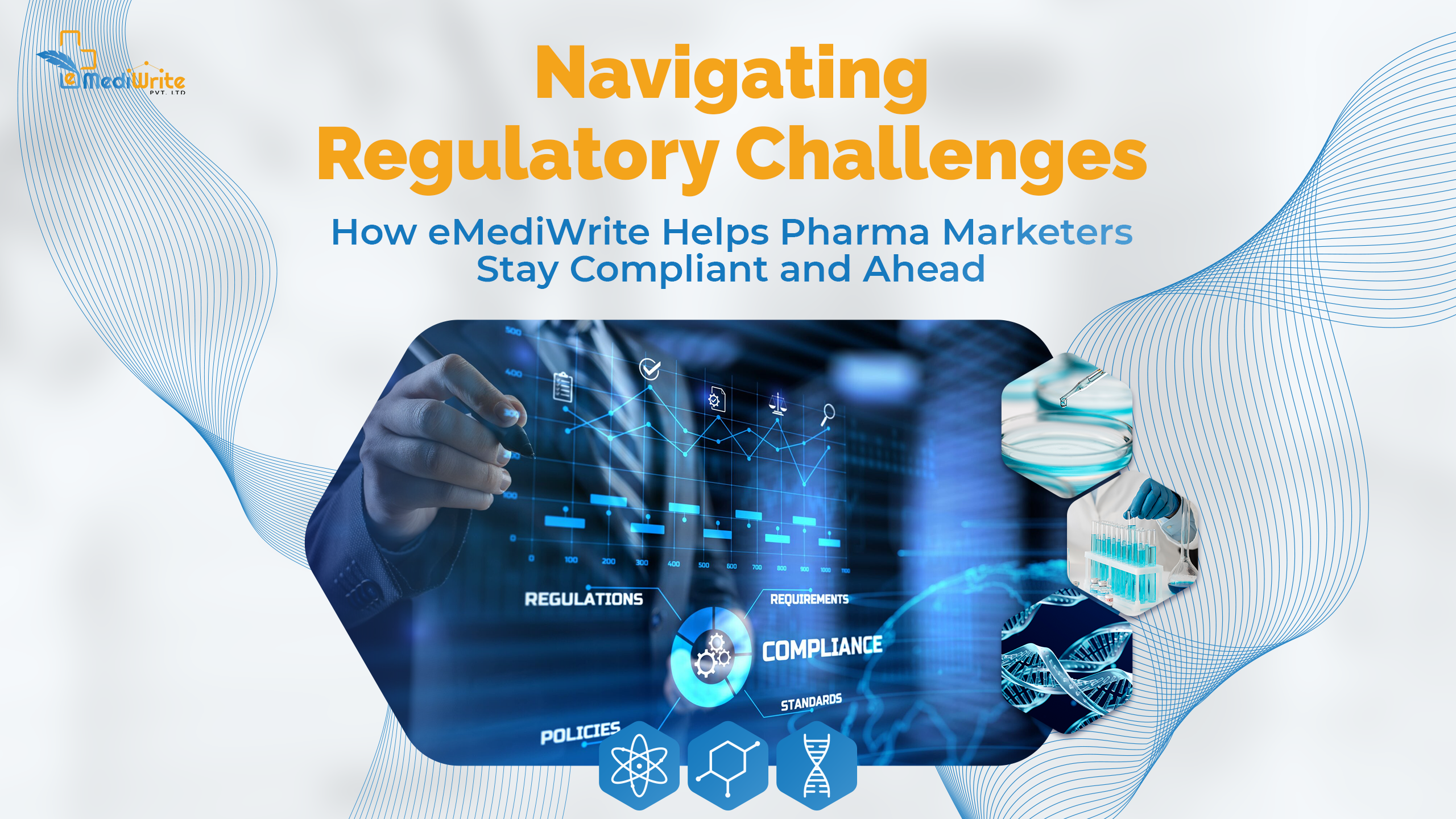
Navigating Regulatory Challenges: How eMediWrite Helps Pharma Marketers Stay Compliant and Ahead

Businessperson reviewing digital compliance dashboard for pharma marketing regulatory challenges.

Introduction to Regulatory Challenges in Pharma Marketing Pharmaceutical marketing operates in one of the most tightly regulated industries in the world a landscape where innovation meets compliance and where every message must pass through layers of scrutiny before reaching healthcare professionals or patients. For marketers, navigating regulatory challenges can feel like walking a tightrope. One unverified claim, missing disclaimer, or off-label statement can result in penalties, legal action, or long-term reputational damage. To thrive in this demanding environment, pharma marketers need more than creative brilliance they need deep knowledge of regulatory compliance in pharma, well-defined approval processes, and technology that makes compliance effortless. That’s exactly what eMediWrite delivers: empowering pharma marketers to overcome regulatory challenges with confidence while crafting impactful, ethical, and compliant campaigns that drive results. What Are Regulatory Challenges in Pharma Marketing? Pharma marketing stands apart from other industries because its communications directly influence patient safety, healthcare decisions, and professional trust. The regulatory challenges in healthcare are not mere administrative barriers they are essential safeguards to ensure that all marketing information is scientifically sound and ethically responsible. Key Regulatory Challenges Include: Each of these regulatory challenges reinforces the need for a compliance-first approach one that maintains creativity without compromising integrity. Also Read This: 5 Strategies for Balancing Pharma Product Innovation with Regulatory Body Mandates. The Role of Regulatory Compliance in Pharma In pharma, regulatory compliance is far more than a box-checking exercise. It is the foundation of trust, ethics, and scientific transparency. A compliant strategy ensures that marketing materials meet strict regulatory expectations set by agencies such as the FDA, EMA, and MHRA and that they accurately reflect clinical evidence. Ignoring or overlooking compliance can lead to: Conversely, regulatory compliance in pharma builds long-term trust with healthcare professionals and patients, positioning a brand as credible and responsible. Compliance doesn’t limit creativity it strengthens it, providing marketers with a trusted framework to innovate responsibly. Also Read This: Strategies That Work: The Role of Content Marketing in Healthcare Key Regulatory Compliance Areas in Pharma Marketing Pharma marketers must focus on these essential areas to achieve consistent compliance: By integrating these principles, marketers can overcome regulatory challenges in healthcare while maintaining agility and creativity in campaign development. Also Read This: The Road to Building a Leading Pharma Brand: A Product Manager\’s Guide How Healthcare Marketing Compliance Differs from Other Industries Why Is Healthcare Marketing Compliance Critical? Unlike retail or consumer marketing, where persuasion is key, healthcare marketing is rooted in responsibility. Healthcare marketing compliance ensures that every communication reflects clinical truth and ethical standards, protecting both patients and professionals. Pharma marketers must walk a fine line between storytelling and science. A single compliance misstep such as overstating benefits or omitting safety information can trigger regulatory action and damage years of brand trust. Because healthcare communication influences real-world decisions, pharmaceutical marketing compliance is held to the highest possible standard. Marketers are not simply promoting products; they are shaping messages that can impact lives. Maintaining healthcare marketing compliance therefore becomes not just a legal duty, but a moral and strategic commitment reinforcing transparency, trust, and long-term success. Also Read This: How Pharma Marketing Teams Actually Win: Pharma Branding Strategies 2025 How Does eMediWrite Help Pharma Marketers Stay Compliant? In a fast-changing regulatory environment, traditional manual methods can no longer keep pace. eMediWrite was built specifically to help pharma marketers manage regulatory challenges more efficiently, ensuring accuracy, accountability, and speed throughout every campaign stage. By combining automation with industry expertise, eMediWrite transforms regulatory compliance in pharma from a burden into a business advantage empowering teams to focus on creativity while staying fully compliant. eMediWrite’s Features for Ensuring Compliance With these tools, eMediWrite turns compliance into an enabler allowing marketers to build campaigns that are both bold and fully compliant. Why Should Pharma Marketers Choose eMediWrite for Regulatory Compliance? Pharma marketers choose eMediWrite because it combines automation, accuracy, and deep regulatory understanding giving them a strategic edge in overcoming regulatory challenges in healthcare. With eMediWrite, marketers can: In essence, eMediWrite is not just software it’s a compliance ally designed to make regulatory compliance in pharma simple, scalable, and sustainable. Conclusion: Turning Compliance into a Catalyst for Success Regulatory challenges in healthcare may be complex, but they don’t have to hold marketers back. With the right approach, compliance can evolve from an obstacle into a powerful driver of credibility and trust. eMediWrite empowers pharma marketers to navigate regulatory challenges with confidence ensuring every campaign is compliant, ethical, and effective. In a world where every word matters, eMediWrite helps you turn regulatory compliance in pharma into a strategic advantage keeping your brand credible, compliant, and ahead of the curve. FAQ What are the biggest regulatory challenges pharma marketers face? The biggest regulatory challenges include ensuring scientific accuracy, avoiding off-label promotion, maintaining patient data privacy, and managing complex approval workflows across digital and traditional channels. How can healthcare marketing compliance impact a pharmaceutical business? Strong healthcare marketing compliance enhances brand trust, reduces risk, and ensures longevity. Non-compliance, however, can result in fines, lawsuits, and reputational damage. What role does eMediWrite play in ensuring regulatory compliance for pharma marketers? eMediWrite automates compliance checks, streamlines approvals, and ensures every campaign adheres to regulatory compliance in pharma standards reducing manual effort and increasing efficiency. What are the key regulatory compliance areas pharma marketers must focus on? Content accuracy, patient privacy, approval documentation, and digital oversight are central to pharmaceutical marketing compliance. How does eMediWrite make regulatory compliance easier for pharma marketers? Through automation, audit trails, and real-time updates, eMediWrite simplifies regulatory challenges, helping teams stay compliant and creative simultaneously. Can eMediWrite help with compliance for both digital and traditional pharma marketing? Yes. eMediWrite supports compliance for both digital channels (social media, email, websites) and traditional materials such as brochures, presentations, and print ads. 

How Pharma Marketing Teams Actually Win: Pharma Branding Strategies 2025

A promotional image with a doctor and the title "PHARMA BRANDING STRATEGIES 2025.

In today’s competitive healthcare market, pharma branding strategies are no longer just about promoting a product, they’re about building trust, credibility, and long-term value. With the rise of digital-first communication and increasing regulatory scrutiny, pharmaceutical marketing teams must adopt smarter, patient-centric, and evidence-based approaches. This comprehensive guide explores the latest pharma branding strategies in 2025 and how teams can leverage effective pharmaceutical brand management to achieve sustainable success. Why Pharma Branding Strategies Matter in 2025 The pharmaceutical industry is experiencing a fundamental shift from product-centric promotion to value-driven pharmaceutical brand building. Physicians, patients, and healthcare providers are demanding more than just efficacy; they want authentic communication, reliable information, and meaningful human connections. Strong pharma branding strategies create differentiation in crowded therapeutic categories, strengthen HCP relationships, and build long-term loyalty that drives revenue growth. As the market becomes increasingly competitive, pharmaceutical brand management has evolved into a strategic necessity that encompasses digital innovation, patient-centricity, and evidence-based communication. Also Read This: 5 DIGITAL MARKETING TIPS FOR THE PHARMA INDUSTRY Essential Pharma Branding Strategies for 2025 1. Patient-Centric Storytelling and Brand Building Patients are no longer passive recipients of treatment. They are empowered decision-makers who actively research their health conditions. Modern pharma branding strategies must develop compelling narratives that highlight patient outcomes, lifestyle improvements, and emotional connections. Effective pharmaceutical brand building requires storytelling that blends scientific data with human experience, creating authenticity and resonance that drives engagement. eMediWrite’s medical communication expertise helps pharmaceutical companies craft patient-centric narratives that build trust and demonstrate real-world value. 2. Digital Pharmaceutical Branding and Transformation Digital pharma transformation has accelerated dramatically, reshaping how pharmaceutical companies engage with stakeholders. From medical content marketing to AI-driven insights, digital pharmaceutical branding strategies must integrate seamlessly across every touchpoint. Key components of successful digital pharma transformation include: 3. Evidence-Based Healthcare Communication Trust remains the foundation of successful pharmaceutical brand management. Every communication must be backed by credible clinical data, regulatory compliance, and transparent messaging. Whether targeting healthcare professionals or patients, teams must ensure scientific accuracy while maintaining clear, engaging language. Best practices for evidence-based communication: Professional medical marketing services ensure that pharmaceutical brands communicate complex scientific information effectively while meeting strict regulatory requirements. 4. Advanced HCP Engagement Beyond Traditional Detailing Healthcare professionals expect sophisticated, value-driven interactions that go beyond traditional sales approaches. Modern pharma branding strategies incorporate digital touchpoints, educational content, and scientific collaborations that position pharmaceutical companies as trusted knowledge partners. Innovative HCP engagement strategies include: 5. Balancing Compliance with Creative Excellence One of the most significant challenges in pharmaceutical brand management involves balancing strict regulatory compliance with creative, emotionally resonant campaigns. Regulatory frameworks demand accuracy and transparency, while audiences seek emotional connection and memorable experiences. Successful pharmaceutical brand building teams create compliant yet compelling campaigns that engage stakeholders without overpromising outcomes or violating industry guidelines. Also Read This: The Role of Content Marketing in Healthcare Emerging Trends Shaping Pharma Branding Strategies AI-Powered Personalization and Data Analytics Artificial intelligence and machine learning are revolutionizing pharmaceutical marketing strategy by enabling hyper-personalized communications. Advanced analytics help brands understand individual patient journeys, predict HCP preferences, and optimize engagement strategies in real-time. Omnichannel Digital Experiences Digital pharmaceutical branding now requires seamless integration across multiple platforms and touchpoints. Successful brands create cohesive experiences that guide stakeholders through personalized journeys, whether they’re researching treatments online, attending virtual events, or engaging with mobile applications. Sustainability and Corporate Responsibility Modern pharmaceutical brand building increasingly emphasizes environmental sustainability and social responsibility. Companies that demonstrate genuine commitment to sustainable practices, ethical clinical trials, and community health initiatives build stronger brand loyalty and trust. Here You Can Read: WHO Marketing Authorization Guidelines Strategic Action Plan for Pharmaceutical Brand Management To excel in 2025’s competitive landscape, pharmaceutical brand management teams should implement a comprehensive strategy that includes: Assessment and Planning Digital Integration and Transformation Team Development and Training Specialized pharmaceutical marketing training helps teams build the skills necessary to navigate complex regulatory environments while creating compelling brand experiences. How eMediWrite Empowers Your Pharma Branding Strategies As a leading ISO 9001:2015–certified medical communications agency, eMediWrite specializes in developing comprehensive pharma branding strategies that drive measurable results for pharmaceutical, biotech, and healthcare organizations. Our expert team blends deep scientific knowledge with strategic marketing expertise to deliver end-to-end pharmaceutical brand management solutions from evidence-based brand narratives and regulatory-compliant medical writing to interactive digital campaigns and omnichannel engagement. Whether you need strategic brand positioning, digital pharma transformation, or KOL engagement programs, eMediWrite ensures every communication builds trust, resonates with healthcare professionals, and accelerates market success. With over 1,200 successful client engagements and 511 completed cases across diverse therapeutic areas, eMediWrite’s integrated approach combines creative services, advanced analytics, and regulatory expertise to maintain compliance while maximizing impact. Our pharmaceutical marketing strategy frameworks differentiate products in competitive markets, and our digital pharmaceutical branding initiatives leverage SEO, social media, and AI-driven insights to create personalized patient and HCP journeys. Ready to elevate your brand? Partner with eMediWrite to transform complex science into compelling stories that drive growth and long-term value. Conclusion Pharma branding strategies in 2025 center on authentic value creation, digital pharmaceutical branding innovation, and meaningful human connections. Teams that master comprehensive pharmaceutical marketing strategy—from patient-centric storytelling to evidence-based healthcare communication—will maintain competitive advantages in an increasingly complex marketplace. In an environment where trust defines brand loyalty and digital pharma transformation accelerates rapidly, robust pharmaceutical brand management and strategic pharmaceutical brand building aren’t optional—they’re essential for sustainable growth and market leadership. Frequently Asked Questions About Pharma Branding Strategies 1. What are the most effective pharma branding strategies for 2025? The most effective pharma branding strategies for 2025 include patient-centric storytelling, digital pharmaceutical branding, evidence-based communication, and advanced HCP engagement. Successful pharmaceutical brand management focuses on building trust through transparent messaging, leveraging digital transformation technologies, and creating personalized stakeholder experiences that address specific therapeutic needs. 2. How does digital pharma transformation impact brand building? Digital pharma transformation revolutionizes pharmaceutical brand building by enabling personalized communication, real-time engagement analytics, and omnichannel experiences. Modern digital pharmaceutical branding strategies utilize AI-driven insights, … Read more

Strategies That Work: The Role of Content Marketing in Healthcare

Healthcare professionals engaging in discussion with patient, overlaid with medical icons and text highlighting strategies in content creation in healthcare, emphasizing insightful and empowering healthcare content by eMediWrite.

Content Marketing in Healthcare In today’s competitive pharma landscape, standing out is tough. Doctors and patients are flooded with information daily. This is where content marketing in healthcare makes the difference. Done strategically, it informs, builds trust, and drives recall. From patient guides to doctor webinars, the right content can elevate your brand credibility and engagement. Why Healthcare Needs Content Marketing Healthcare depends on credibility. A misplaced claim or outdated data can erode trust instantly. Effective healthcare content marketing strategies help: A campaign using patient explainer videos recently saw 30% higher engagement than traditional brochures, proving the value of the right content format. Winning Healthcare Content Strategies Content Formats That Work Best Choosing the right content format is critical to engage doctors and patients effectively.   Picking the right mix ensures your healthcare content marketing meets both engagement and business goals. Patient-Centric Content Approaches Patient-focused content goes beyond information, it addresses concerns, simplifies treatments, and answers common questions. Tools like tear-off pads, symptom checkers, educational guides, and FAQs improve understanding and adherence, positioning the brand as a trusted healthcare partner rather than just a product provider. Medical Content Creation Tips for Accuracy and Trust Accuracy is essential. Using verified sources, collaborating with medical experts, and keeping language clear ensures reliability. Reviewing for compliance before publishing builds credibility. Following these medical content creation tips helps maintain trust while effectively communicating with doctors and patients. Social Media Tactics for Healthcare Marketing Social media has become a powerful tool for healthcare engagement. LinkedIn helps connect with professionals, Instagram reaches younger patients visually, and YouTube supports healthcare video marketing strategies. Sharing verified updates, patient stories, or hosting live Q&A sessions builds communities and strengthens trust without over-relying on direct promotion. The Role of Healthcare Video Marketing Strategies Emerging Healthcare Marketing Trends Personalization and Patient Experience Personalized communication is shaping the future of healthcare marketing. Targeted campaigns, tailored resources, and customized emails improve engagement. Patients and doctors are more likely to respond to content that feels relevant to their needs, reflecting one of the most significant healthcare marketing trends in 2025. Rise of Data-Driven Content Data is transforming how brands approach content. Analytics help track engagement, understand audience preferences, and refine messaging. By leveraging insights, healthcare content marketing strategies become more precise and impactful, reaching the right people with the right content at the right time. Overcoming Healthcare Marketing Challenges Compliance is a major hurdle. Balancing creativity with regulatory requirements is essential. Another challenge is credibility; with many brands competing for attention, delivering consistent, accurate, and valuable content is what sets a brand apart. Addressing these healthcare marketing challenges ensures content resonates and maintains trust. How eMediWrite Supports Healthcare Content Marketing At eMediWrite, we specialize in delivering impactful, compliant, and credible medical content tailored to the needs of healthcare brands. Whether it’s offering practical medical content creation tips or driving full-scale campaign execution, we empower organizations to engage meaningfully with both doctors and patients. Our approach blends creativity with scientific accuracy, ensuring every piece of content not only resonates but also delivers measurable results. With a focus on trust, compliance, and long-term value, eMediWrite is your partner in building stronger connections across the healthcare ecosystem. Conclusion Content marketing in healthcare is essential for credibility, engagement, and measurable impact. By following well-planned healthcare content marketing strategies, addressing healthcare marketing challenges, adopting the latest healthcare marketing trends, and using healthcare video marketing strategies, brands can effectively connect with both doctors and patients. Accurate, patient-focused content is the key to future success. Further Resources Frequently Asked Questions Q1: What is Content Marketing in Healthcare and why is it important? Content marketing in healthcare means creating and sharing patient-focused, accurate, and engaging resources like infographics, explainer videos, or webinars. It simplifies complex therapies, builds brand credibility, and fosters long-term trust among patients and healthcare professionals. Q2: Which Healthcare content marketing strategies deliver the best ROI? The most impactful strategies include: When supported by data-driven insights, these approaches ensure precise targeting and measurable outcomes. Q3: What are the top Healthcare marketing trends to watch in 2025?  Keeping pace with these trends ensures relevance and sustainable growth. Q4: How can Healthcare social media marketing enhance patient engagement? By using: Q5: What are the main Healthcare marketing challenges and how can they be overcome? Challenges: Q6: Why should brands invest in Healthcare video marketing strategies? Videos, whether animated patient guides or real-world case studies make complex topics simple, connect emotionally, and improve recall. Adding video to patient education programs can drive up to 30% higher engagement. Q7: What are the best Medical content creation tips for ensuring accuracy and compliance?

eMediWrite at COSDERMINDIA 2025: Empowering Pharma Brands with Strategy, Science & Storytelling

COSDERMINDIA 2025 once again proved to be a premier convergence of innovation, science, and marketing brilliance in dermatology. Held in Delhi, the event brought together leading dermatologists, pharma leaders, skincare innovators, and medical communication experts. This year, the eMediWrite team had the privilege of being invited to meet with key marketing heads, brand managers, and senior leadership teams from top pharmaceutical and cosmeceutical companies. Our purpose? To engage in high-value conversations around brand strategy, scientific publications, and omnichannel communication planning for the upcoming year. A Thriving Ground for Strategic Collaborations As India’s trusted partner in medical communication and publication management, eMediWrite’s presence at COSDERMINDIA 2025 was a natural fit. The dermatology and skincare segment is evolving rapidly with new molecules, combination therapies, and changing consumer expectations. In such a dynamic space, the need for credible, creative, and compliant communication has never been greater. We were excited to sit down with multiple pharma teams to discuss upcoming product launches, publication plans, CME support, KOL engagement strategies, and the growing demand for real-world evidence storytelling. Our conversations often extended beyond content, touching the core of positioning, brand tonality, and multi-platform medical visibility. Driving the Dialogue: Publications, Platforms, & Personalization From advisory board meeting summaries to structured publication roadmaps, our consultations emphasized how strategic scientific content can directly impact brand equity and HCP trust. We also offered insights on: Whether it was a premium anti-fungal brand, a dermato-cosmetic new entrant, or a legacy skin treatment brand preparing for a relaunch, we were able to tailor our guidance to each brand’s maturity and marketing goals. A Growing Role in Dermatology Brand-Building We’re humbled to see how eMediWrite’s role is evolving not just as a content partner but as a strategic collaborator. COSDERMINDIA 2025 validated that more and more pharma companies are now seeking integrated medical communication support that blends scientific rigor with creative precision. As we look ahead to 2025, our commitment remains stronger than ever, to help brands educate, elevate, and ethically grow. If you’re a pharma leader, marketer, or medical affairs team looking to reimagine your dermatology content ecosystem, let’s talk. Together, we can build communication that wins minds and markets.

Nanomedicine in Indian Pharma: Status, Challenges, and Future

What Is Nanomedicine? Nanomedicine involves using nanoscale materials typically under 100 nm for diagnosis, treatment, monitoring, and control of biological systems. It enables drug delivery with high precision, reduced toxicity, and enhanced bioavailability, offering solutions to many limitations of conventional therapeutics. Current Landscape in India India’s nanomedicine journey is gaining momentum, though still in its formative stage. Research institutions such as IISc Bangalore and IIT Bombay have pioneered significant innovations. For example, IISc’s oral insulin nanoparticle delivery system promises to eliminate daily injections for diabetics. Companies like Sun Pharma and Cipla have developed nano-formulations of chemotherapy agents to minimize side effects. Startups like Yostra Labs use nano-enabled technologies for diabetic foot diagnosis, showing nanomedicine’s reach beyond drug delivery. Applications in Disease Management Major Challenges The Way Forward Conclusion To catalyze growth, India must establish clear nano-pharma regulatory guidelines, possibly modeled on FDA or EMA nanomedicine frameworks. Initiatives like BIRAC’s Biotechnology Ignition Grant (BIG) are already helping nano-biotech startups scale early-stage ideas. Expanding such schemes and promoting academia-industry collaborations, such as those seen in the NMITLI program (CSIR), can fast-track innovation. The integration of nanomedicine with AI for precision diagnostics, particularly in rural healthcare delivery, presents a massive untapped opportunity.

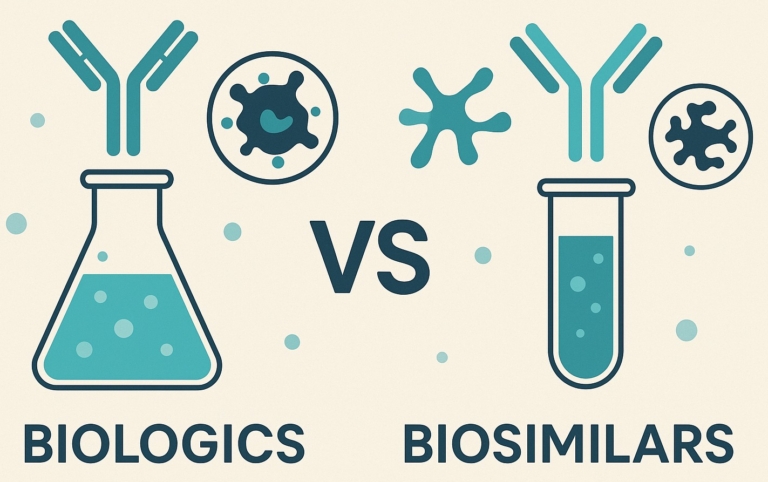
Biosimilars vs. Biologics: The Science Every Indian Pharma Team Must Understand

Biologics: A New Era of Therapeutics Biologics are complex, large-molecule drugs made using living cells. They include monoclonal antibodies, cytokines, and vaccines used to treat cancer, autoimmune diseases, and metabolic disorders. Unlike small-molecule drugs, biologics require advanced technology and stringent manufacturing controls. Examples like Herceptin (trastuzumab) for HER2-positive breast cancer and Humira (adalimumab) for autoimmune conditions highlight their transformative impact, but also their high cost and limited accessibility. Biosimilars: Precision Imitation for Broader Access Biosimilars are near-identical alternatives to approved Biologic drugs, offering the same clinical effect at a reduced cost, developed after the original biologic’s patent expires. Development is rooted in the totality of evidence, robust analytical data, PK/PD studies, and clinical trials. India’s Biocon Biologics and Dr. Reddy’s have led the way with biosimilars like Ogivri (trastuzumab) and pegfilgrastim, increasing global access to cancer care. Scientific Rigor: Beyond Generics Unlike generics, biosimilars demand deep scientific capabilities. Developers must analyze the protein’s structure, glycosylation patterns, and biological activity using tools like mass spectrometry and bioassays. Even the host cell line can influence outcomes. Biosimilar trials focus on equivalence, not superiority. Zarxio, the first FDA-approved biosimilar (to Neupogen), exemplifies this high bar of regulatory scrutiny. Regulatory Landscape Regulators like CDSCO, USFDA, EMA, and WHO use a stepwise evaluation process. India is advancing rapidly, but global harmonization remains key. A milestone achievement was Biocon’s Semglee, a biosimilar to insulin glargine, which earned interchangeability status from the USFDA, enabling automatic substitution in U.S. pharmacies. India’s Opportunity: Scale with Science India has the talent and infrastructure to lead globally in biosimilars. Firms like Biocon, Intas, Zydus, and Lupin are expanding globally. But scientific integrity and regulatory compliance must remain non-negotiable. Conclusion: Science First, Always For Indian pharma, biosimilars are more than a cost play; they’re a scientific and strategic imperative. Winning the biosimilar race requires a deep understanding of biologics, global regulatory dynamics, and an unwavering commitment to quality and safety. The future will belong not to the cheapest, but to the most trusted.